

Maximising F&I Performance: Essential KPIs for Automotive Dealers/Importers in MENA

In our new 8-part series covering essential KPIs for Dealers/Importers in the MENA region, we now turn our attention to the Finance & Insurance (F&I) department—often referred to as the dealership’s most profitable square metres. The F&I department has evolved from a simple paperwork processor to a critical profit centre for Automotive businesses across the MENA region. As vehicle margins continue to face pressure, F&I performance has become increasingly vital to overall dealership profitability. To optimise this crucial department, Dealers/Importers need to implement and monitor the right Key Performance Indicators (KPIs). This article explores the essential F&I metrics that drive profitability, efficiency, and compliance in the unique MENA Automotive market. Product Penetration Metrics: Maximising Revenue Opportunities Product penetration metrics measure how effectively your F&I department sells additional products and services to vehicle buyers: Finance Penetration Rate: This fundamental metric measures the percentage of vehicle sales financed through your dealership rather than outside financing or cash purchases. In the MENA region, where banking relationships and finance options vary significantly between markets, monitoring this rate is particularly important. Industry benchmarks typically target 70-80% for new vehicles and 60-70% for used vehicles. Higher rates indicate effective finance department performance and significant profit opportunity. Top performers focus on offering competitive rates and building relationships with multiple lenders to accommodate various customer credit profiles specific to regional markets. Service Contract Penetration: This tracks the percentage of vehicles sold with extended service contracts or warranties. In the harsh environmental conditions prevalent across much of the MENA region (extreme heat, dust, etc.), these products offer genuine value to customers while providing substantial profit to dealerships. Industry averages range from 40-45%, while top performers achieve 55%+ penetration. These products typically generate $800-1,200 in profit per contract, making them crucial to F&I department profitability. Effective presentation of the value proposition based on vehicle reliability data and region-specific repair cost analysis improves this metric. GAP Insurance Penetration: This measures the percentage of financed vehicles sold with Guaranteed Asset Protection insurance. Industry benchmarks range from 20-30%, with higher rates for longer-term loans and vehicles with faster depreciation. In MENA markets, where insurance requirements and regulations differ significantly between countries, having market-specific knowledge of insurance products and regulations is essential for maximising appropriate penetration. Vehicle Protection Products Penetration: This tracks the sale of protection packages, theft deterrent systems, and other vehicle protection products as a percentage of total sales. The extreme climate conditions in many MENA markets make protection products particularly valuable, and well-performing F&I departments achieve 25-35% penetration across these products. Product bundling strategies often improve overall penetration rates. Financial Performance Metrics: Measuring Profitability Financial metrics reveal the true contribution of your F&I department to overall dealership profitability: Average F&I Income Per Vehicle Retailed (PVR): This calculates the total F&I department income divided by the number of vehicles sold. Industry benchmarks range from $1,200-1,500 for mainstream brands and $1,800-2,200 for luxury brands, though these figures can vary significantly across different MENA markets. Top performers may exceed $2,500 PVR. This comprehensive metric reflects overall F&I effectiveness and is often tied to management compensation. Product Gross Profit: This tracks the profit generated from the sale of F&I products. It’s typically broken down by product type to identify the most profitable offerings. Understanding product profitability helps F&I managers focus on high-margin products that also provide genuine customer value, especially those that address region-specific concerns like extreme heat protection or extended parts availability. F&I Department Contribution: This measures the net profit contribution of the F&I department after all direct expenses. As front-end margins on vehicle sales continue to compress, F&I contribution has become increasingly vital to overall dealership profitability, often accounting for 30-40% of total dealership profit. In luxury-oriented markets like the UAE, this contribution can be even higher. Average Products Per Deal: This tracks the average number of F&I products sold per vehicle transaction. Industry benchmarks range from 1.5-2.0 products per deal, while top performers achieve 2.5+ on average. This metric helps identify opportunities for appropriate product packaging and presentation improvements. In the relationship-focused business culture of the MENA region, building trust is essential for multi-product sales success. Operational Efficiency Metrics: Streamlining Processes Efficiency metrics help identify bottlenecks and opportunities to improve the customer experience while maximising profitability: F&I Deals Per Manager: This tracks the number of deals processed per F&I manager per month. Efficient departments handle 80-100+ deals per manager monthly. This metric helps determine appropriate staffing levels and identifies process bottlenecks. In markets with highly seasonal sales patterns, like those affected by summer heat or seasonal religious observances, this metric may fluctuate significantly throughout the year. Contract Approval Rate: This measures the percentage of finance applications approved by lenders. Lower approval rates indicate either customer credit quality issues or insufficient lender relationships. Well-performing F&I departments maintain relationships with 15-20+ lenders to accommodate various credit profiles. In MENA markets where banking regulations and credit reporting infrastructure vary significantly between countries, understanding local lending parameters is crucial for maximising approvals. First Pass Funding Rate: This tracks the percentage of contracts funded by lenders on first submission without requiring corrections or additional documentation. Higher rates (target: 90%+) indicate efficient processes and proper documentation practices. Low rates create cash flow delays and necessitate contract rewrites that damage customer experience. In markets with more complex documentation requirements, maintaining high first-pass rates requires meticulous attention to detail and strong lender relationships. Compliance and Risk Metrics: Protecting Your Business In the diverse regulatory environments across MENA markets, compliance metrics are essential for managing risk: Compliance Audit Scores: This measures performance on internal and external compliance audits examining adherence to regional regulatory frameworks. In MENA markets, this includes compliance with country-specific consumer protection laws, financial services regulations, data protection requirements, and tax compliance. Regulations vary significantly across MENA countries, with GCC nations typically having more formalised regulatory structures. Top dealerships conduct regular internal audits aligned with local regulatory requirements and maintain detailed documentation of compliance practices specific to each market they operate in. Rate Markup Distribution: This analysis examines
AMENA Auto Monthly Review – October 2025
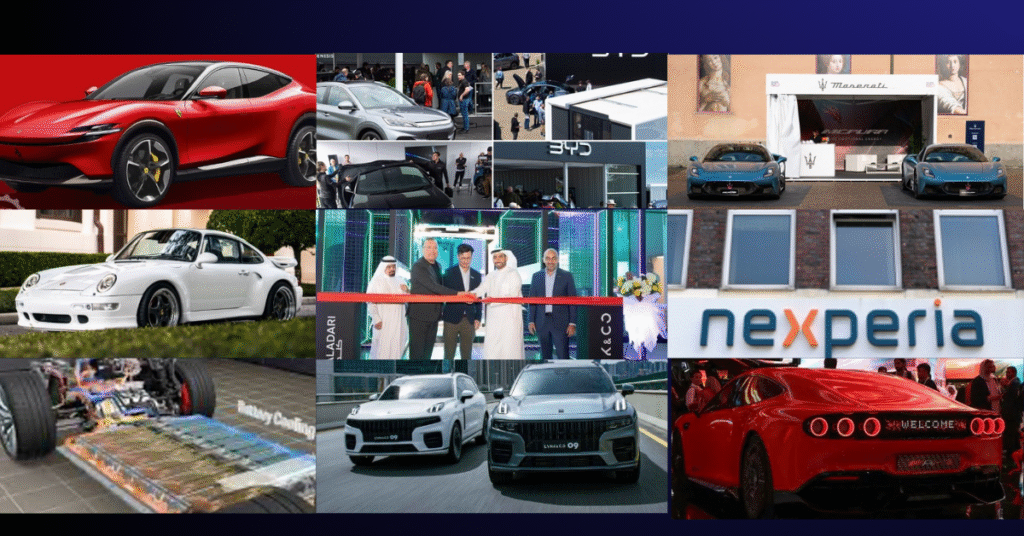
Introduction The industry entered Q4 with resilience and recalibration. Battery technology, premium product launches and connected services accelerated, yet policy risk and component constraints reminded everyone that execution discipline matters. Within MENA, network expansion, digital platforms and smart-mobility pilots underscored the region’s rising influence on global roadmaps. This monthly brief curates what changed, why it matters, and where the value will be created next. Volvo and Volkswagen Sound Alarm Over Dutch Takeover of Chinese-Owned Chipmaker Nexperia The Dutch government’s decision to seize control of Nexperia, citing national security concerns over its Chinese ownership, has sparked alarm among major automakers. Volvo and Volkswagen warned that the move could disrupt semiconductor supply chains essential for vehicle production. The intervention, made under a Cold War-era law, underscores Europe’s growing resolve to safeguard its tech assets amid geopolitical tensions. Industry associations in Germany and Japan cautioned that chip shortages could trigger temporary factory shutdowns. The development adds further strain to global automakers already grappling with rare-earth export restrictions and intensifying competition from Chinese EV brands. Toyota Reveals Camry GT-S Concept at SEMA Show Toyota has unveiled the Camry GT-S Concept at the 2025 SEMA Show, based on the Camry XSE AWD Hybrid platform. The concept showcases performance-inspired design cues and enhanced suspension tuning while retaining hybrid efficiency. The model underlines Toyota’s intent to infuse sportiness into its mainstream line-up, keeping the Camry relevant amid intensifying EV and SUV competition. Geely Launches EX5 Electric SUV in UK Market Geely has introduced the EX5 electric SUV to the United Kingdom, marking the brand’s European debut with a value-oriented compact crossover. The model offers a range of around 267 miles (WLTP) and supports rapid charging from 30 to 80 percent in just 20 minutes via a 160 kW DC system. The launch is part of Geely’s broader expansion strategy, including plans to establish 100 sales and service outlets by 2026. It underscores the automaker’s intent to compete aggressively in Europe’s volume EV segment while enhancing its global footprint. Porsche Details High-Voltage System for Cayenne Electric SUV Porsche has unveiled technical details of its upcoming Cayenne Electric, featuring a high-voltage battery with a 113 kWh capacity and an 800-volt architecture capable of delivering up to 400 kW DC fast charging. This allows a 10 to 80 percent charge in under 16 minutes, significantly enhancing range efficiency and usability. The system integrates directly into the vehicle structure, improving rigidity, weight distribution, and driving dynamics—underscoring Porsche’s continued focus on blending performance and electrification in the luxury SUV segment. GM Returns with Autonomous Cadillac SUV After Cruise Exit General Motors is preparing to re-enter the autonomous-vehicle segment through Cadillac, with a self-driving luxury SUV expected to debut by 2028. The model will feature next-generation “hands-off” driver-assistance capabilities, representing a more cautious and premium-focused re-entry following GM’s previous exit from commercial robotaxi operations. This strategic pivot highlights the company’s renewed emphasis on integrating advanced autonomy within consumer-facing products, aiming to redefine luxury and technology convergence under the Cadillac brand. BYD Teases Kei Car Prototype Ahead of Japan Debut BYD has previewed its first electric kei car prototype ahead of its anticipated debut in Japan, marking the brand’s entry into one of the world’s most compact and demanding automotive segments. The prototype represents BYD’s broader strategy of adapting its EV portfolio to local market requirements and regulations. Targeting Japan’s urban mobility landscape, the model is expected to combine affordability, efficiency, and cutting-edge battery technology, reinforcing BYD’s ambition to expand its global footprint through region-specific innovations. Bentley Expands in India with Dual Showroom Launches Bentley has opened new, fully operational showrooms in Mumbai and Bengaluru, signalling a deeper commitment to India’s growing luxury automotive market. The facilities, located at The Galleria, Trident Hotel, and Indraprastha Invictus, reflect the brand’s global retail design standards. Operated in partnership with Infinity Cars and Kun Premium Cars, the sites offer Bentley’s full model range including the Bentayga, Flying Spur, and Continental GT. Supported by Škoda Auto Volkswagen India, the expansion enhances Bentley’s regional presence. The brand frames this move as elevating customer experience and accessibility across the country. Lamborghini Inaugurates Flagship Mayfair Showroom in London Lamborghini officially opened its flagship Mayfair showroom in London’s Berkeley Square on 9 October, led by Chairman and CEO Stephan Winkelmann. The new site features an advanced Ad Personam lounge, offering the most extensive range of colours and finishes in Europe. Designed as a ‘destination’ space, it reflects the brand’s evolution towards a fully hybridised model line-up. The showroom will serve as a showcase for the company’s latest models and bespoke options. This opening reinforces Lamborghini’s presence at the heart of one of the world’s leading luxury capitals. Volkswagen Group Increases Global Deliveries to 6.6 Million Vehicles Volkswagen Group reported 6.6 million global deliveries by the end of September 2025, marking a slight rise over the previous year. Stronger performance in Europe, where deliveries grew by 8 per cent, offset weaker results in China and the United States. The Group’s ongoing product offensive, featuring around 60 models, supported higher order intake and improved brand momentum. Battery-electric vehicle deliveries surged by 80 per cent in Europe and 40 per cent globally. Management emphasised a healthy order pipeline and continued customer demand across its diverse portfolio. Stellantis Reports Q3 2025 Shipments of 1.3 Million Units, Down 13% Year-on-Year Stellantis announced estimated consolidated shipments of 1.3 million units for the third quarter of 2025, reflecting a 13 per cent decline compared with last year. The decrease was largely driven by lower production in Europe due to component shortages and market adjustments. North America and South America remained stable, while the Middle East and Africa recorded moderate growth. The Group continues to optimise its global inventory and product mix to balance demand and profitability. Stellantis reaffirmed its focus on electrification and cost discipline to sustain long-term competitiveness. 2026 Toyota C-HR Gains New Mid-Grade Variant and Expanded GR Sport Range Toyota has refreshed the 2026 C-HR line-up with an additional mid-grade specification and a broader
Driving Automotive Marketing Performance: Essential KPIs for Dealers/Importers in MENA

In our new 8-part series covering essential KPIs for Dealers/Importers in the MENA region, we now focus on Marketing—a critical function that drives dealership growth and customer acquisition. The Automotive marketing landscape has undergone dramatic transformation in recent years, particularly across MENA markets where digital adoption has accelerated rapidly. Today’s successful Dealers/Importers must balance traditional marketing approaches with sophisticated digital strategies to reach customers effectively in this evolving environment. This article explores the key performance indicators that drive marketing excellence for Automotive retail operations in the unique context of MENA markets. Digital Marketing Metrics: Maximising Online Effectiveness Digital metrics help quantify the performance of your online marketing initiatives: Website Traffic: This measures the total number of visitors to your dealership website. Beyond raw visitor count, it’s valuable to segment this by traffic source (organic search, paid search, social media, direct). Most dealerships aim for consistent month-over-month growth. Modern dealerships typically track this through Google Analytics or similar platforms, looking at metrics like average time on site and bounce rate alongside total visitors. In MENA markets, where mobile usage often exceeds global averages, paying particular attention to mobile traffic performance is essential. Lead Conversion Rate: This calculates the percentage of website visitors who take a desired action such as submitting a contact form, requesting a quote, or scheduling a test drive. Industry benchmarks typically range from 1.5% to 3% for dealership websites. Optimising landing pages, forms, and calls-to-action can significantly improve this metric. In the MENA region, where customer service expectations are often high, ensuring rapid response to digital leads directly impacts conversion success. Cost Per Lead (CPL): This measures how much your dealership spends on marketing to generate each new lead. It’s calculated by dividing total marketing spend by the number of leads generated. Automotive industry averages range from $25-$45 per lead, though this varies by market and vehicle segment. Lower CPL indicates more efficient marketing spend. In diverse MENA markets, CPL can vary significantly between countries and should be benchmarked against local standards. Search Engine Rankings: This tracks where your dealership appears in search results for relevant keywords like “[brand] dealer [city]” or “new cars [city].” First-page rankings, particularly in the top three positions, dramatically increase visibility and traffic. Many dealerships invest in SEO and local search optimisation to improve these rankings. In the MENA region, optimising for both English and Arabic search terms (where relevant) is essential for maximum market penetration. Pay-Per-Click (PPC) Performance: This measures the effectiveness of paid search advertising, including metrics like click-through rate (CTR), cost per click (CPC), and conversion rate. Automotive industry CTR averages range from 1.5% to 3.5% for search ads. Effective keyword targeting and ad copy can significantly improve these metrics. In multilingual MENA markets, testing ad performance across different languages and cultural contexts often yields substantial performance improvements. Social Media and Reputation Metrics: Building Your Digital Brand These metrics help evaluate your dealership’s online presence and customer perception: Social Media Engagement Rate: This measures how actively your audience interacts with your social media content through likes, comments, shares, and clicks. Engagement rates of 1-3% are considered good in the Automotive industry. Content featuring actual customers, behind-the-scenes dealership stories, and new model reveals typically generate the highest engagement. In the relationship-focused MENA markets, authentic engagement often drives higher conversion than purely promotional content. Online Review Metrics: This tracks both the quantity and quality of reviews across platforms like Google, Facebook, and regional platforms such as Yallamotor, Dubizzle, and Opensooq. The average star rating (aim for 4.5+ stars) and review response rate (target 100%) are particularly important as they directly influence consumer purchase decisions. Regional consumer research indicates that over 80% of MENA Automotive customers consult online reviews before visiting a dealership, with particular emphasis on Arabic-language reviews for localised customer experiences. Social Reach and Audience Growth: This measures the size of your social media audience and how quickly it’s growing. While raw follower counts matter less than engagement, consistent growth indicates effective content strategy. Many dealerships track month-over-month follower growth rates across platforms. In MENA markets, where social media usage rates are among the highest globally, building social presence is particularly valuable for brand development. Share of Voice:This measures how much your dealership dominates the conversation in your market compared to competitors. It can be calculated by analysing mentions across social media, news, and review sites relative to competitors. Higher share of voice typically correlates with stronger brand awareness. In competitive MENA metropolitan markets like Dubai, Riyadh or Cairo, tracking share of voice helps gauge marketing effectiveness against well-funded competitors. Traditional Marketing Metrics: Measuring Offline Performance Despite digital growth, traditional marketing remains important in many MENA markets: Marketing Return on Investment (ROI): This calculates the return generated from marketing investments, measured by attributing sales and gross profit to specific marketing channels and campaigns. Sophisticated dealerships track ROI by marketing channel to optimise their marketing mix. Industry leaders aim for 3:1 or higher ROI on marketing spend. In the diverse MENA region, ROI can vary significantly by market channel and should be measured against localised benchmarks. Walk-in Traffic: This counts the number of customers who physically visit the dealership, often tracked through customer relationship management (CRM) systems. While digital leads are important, many customers still prefer to walk in, making this a vital metric. Dealerships typically track traffic patterns by day of week and time of day to optimise staffing. In many MENA markets where shopping malls remain cultural hubs, dealerships with mall locations or showrooms often measure specific metrics related to mall foot traffic conversion. Marketing Campaign Response Rate: This measures the percentage of recipients who respond to direct marketing efforts like mail, email, or SMS campaigns. Industry averages range from 0.5% to 2% for direct mail and 10-15% for email campaigns to existing customers. Higher response rates indicate more relevant messaging and offers. In MENA markets, where SMS open rates often exceed 95%, SMS marketing frequently outperforms email for immediate response campaigns. Cost Per Sale/Acquisition (CPA): This calculates the
Maximising Parts Department Efficiency: Essential KPIs for Automotive Dealers/Importers in MENA
In our new 8-part series covering essential KPIs for Dealers/Importers in the MENA region, we now focus on Marketing—a critical function that drives dealership growth and customer acquisition. The Automotive marketing landscape has undergone dramatic transformation in recent years, particularly across MENA markets where digital adoption has accelerated rapidly. Today’s successful Dealers/Importers must balance traditional marketing approaches with sophisticated digital strategies to reach customers effectively in this evolving environment. This article explores the key performance indicators that drive marketing excellence for Automotive retail operations in the unique context of MENA markets. Digital Marketing Metrics: Maximising Online Effectiveness Digital metrics help quantify the performance of your online marketing initiatives: Website Traffic: This measures the total number of visitors to your dealership website. Beyond raw visitor count, it’s valuable to segment this by traffic source (organic search, paid search, social media, direct). Most dealerships aim for consistent month-over-month growth. Modern dealerships typically track this through Google Analytics or similar platforms, looking at metrics like average time on site and bounce rate alongside total visitors. In MENA markets, where mobile usage often exceeds global averages, paying particular attention to mobile traffic performance is essential. Lead Conversion Rate: This calculates the percentage of website visitors who take a desired action such as submitting a contact form, requesting a quote, or scheduling a test drive. Industry benchmarks typically range from 1.5% to 3% for dealership websites. Optimising landing pages, forms, and calls-to-action can significantly improve this metric. In the MENA region, where customer service expectations are often high, ensuring rapid response to digital leads directly impacts conversion success. Cost Per Lead (CPL): This measures how much your dealership spends on marketing to generate each new lead. It’s calculated by dividing total marketing spend by the number of leads generated. Automotive industry averages range from $25-$45 per lead, though this varies by market and vehicle segment. Lower CPL indicates more efficient marketing spend. In diverse MENA markets, CPL can vary significantly between countries and should be benchmarked against local standards. Search Engine Rankings: This tracks where your dealership appears in search results for relevant keywords like “[brand] dealer [city]” or “new cars [city].” First-page rankings, particularly in the top three positions, dramatically increase visibility and traffic. Many dealerships invest in SEO and local search optimisation to improve these rankings. In the MENA region, optimising for both English and Arabic search terms (where relevant) is essential for maximum market penetration. Pay-Per-Click (PPC) Performance: This measures the effectiveness of paid search advertising, including metrics like click-through rate (CTR), cost per click (CPC), and conversion rate. Automotive industry CTR averages range from 1.5% to 3.5% for search ads. Effective keyword targeting and ad copy can significantly improve these metrics. In multilingual MENA markets, testing ad performance across different languages and cultural contexts often yields substantial performance improvements. Social Media and Reputation Metrics: Building Your Digital Brand These metrics help evaluate your dealership’s online presence and customer perception: Social Media Engagement Rate: This measures how actively your audience interacts with your social media content through likes, comments, shares, and clicks. Engagement rates of 1-3% are considered good in the Automotive industry. Content featuring actual customers, behind-the-scenes dealership stories, and new model reveals typically generate the highest engagement. In the relationship-focused MENA markets, authentic engagement often drives higher conversion than purely promotional content. Online Review Metrics: This tracks both the quantity and quality of reviews across platforms like Google, Facebook, and regional platforms such as Yallamotor, Dubizzle, and Opensooq. The average star rating (aim for 4.5+ stars) and review response rate (target 100%) are particularly important as they directly influence consumer purchase decisions. Regional consumer research indicates that over 80% of MENA Automotive customers consult online reviews before visiting a dealership, with particular emphasis on Arabic-language reviews for localised customer experiences. Social Reach and Audience Growth: This measures the size of your social media audience and how quickly it’s growing. While raw follower counts matter less than engagement, consistent growth indicates effective content strategy. Many dealerships track month-over-month follower growth rates across platforms. In MENA markets, where social media usage rates are among the highest globally, building social presence is particularly valuable for brand development. Share of Voice: This measures how much your dealership dominates the conversation in your market compared to competitors. It can be calculated by analysing mentions across social media, news, and review sites relative to competitors. Higher share of voice typically correlates with stronger brand awareness. In competitive MENA metropolitan markets like Dubai, Riyadh or Cairo, tracking share of voice helps gauge marketing effectiveness against well-funded competitors. Traditional Marketing Metrics: Measuring Offline Performance Despite digital growth, traditional marketing remains important in many MENA markets: Marketing Return on Investment (ROI): This calculates the return generated from marketing investments, measured by attributing sales and gross profit to specific marketing channels and campaigns. Sophisticated dealerships track ROI by marketing channel to optimise their marketing mix. Industry leaders aim for 3:1 or higher ROI on marketing spend. In the diverse MENA region, ROI can vary significantly by market channel and should be measured against localised benchmarks. Walk-in Traffic: This counts the number of customers who physically visit the dealership, often tracked through customer relationship management (CRM) systems. While digital leads are important, many customers still prefer to walk in, making this a vital metric. Dealerships typically track traffic patterns by day of week and time of day to optimise staffing. In many MENA markets where shopping malls remain cultural hubs, dealerships with mall locations or showrooms often measure specific metrics related to mall foot traffic conversion. Marketing Campaign Response Rate: This measures the percentage of recipients who respond to direct marketing efforts like mail, email, or SMS campaigns. Industry averages range from 0.5% to 2% for direct mail and 10-15% for email campaigns to existing customers. Higher response rates indicate more relevant messaging and offers. In MENA markets, where SMS open rates often exceed 95%, SMS marketing frequently outperforms email for immediate response campaigns. Cost Per Sale/Acquisition (CPA): This calculates
AMENA Auto Monthly Review – September 2025
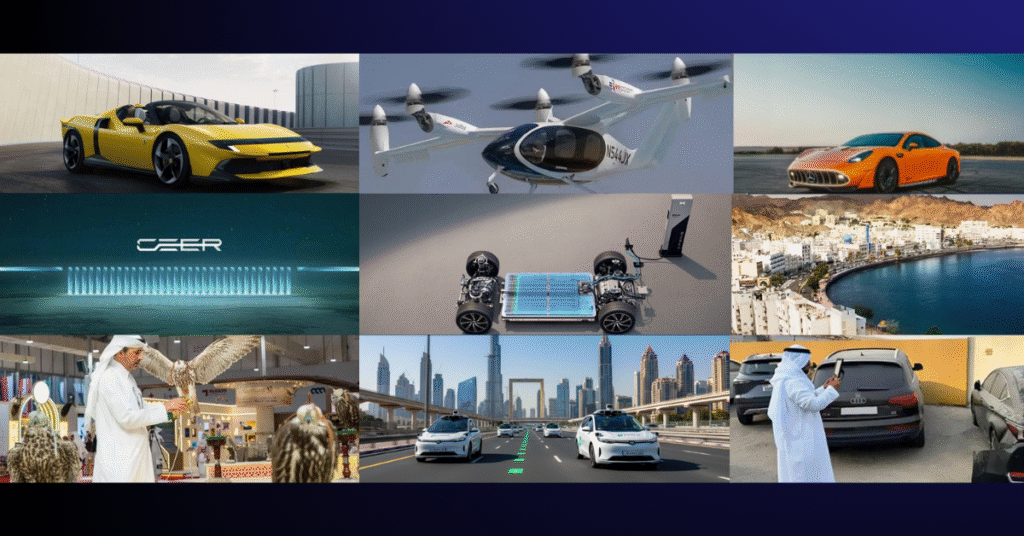
Introduction The global automotive industry stands at a defining crossroads — where electrification, automation, and digital transformation are no longer future ambitions but the engines of present progress. Around the world, manufacturers are reimagining mobility through bold innovation, operational resilience, and a renewed commitment to sustainability. From Europe’s precision in engineering to Asia’s technological leadership and the Middle East’s expanding influence, every region contributes to a collective shift that is reshaping how vehicles are designed, produced, and experienced. This month’s developments reveal an ecosystem driven by intelligent systems, advanced logistics, and design philosophies that merge efficiency with emotion. Electric vehicles, hybrid technologies, and AI-led mobility platforms continue to accelerate adoption, while markets in the Middle East and Africa emerge as key players in defining tomorrow’s automotive agenda. Together, these movements signal not just the evolution of transport — but the transformation of an entire global industry into one guided by innovation, integrity, and long-term vision. BYD Hits 100 UK Retailer Sites Milestone in Record Time BYD has achieved a key distribution milestone, reaching 100 retail sites in the UK in record time since its market entry. This expansion significantly boosts its physical presence and improves customer access across the country. The milestone aligns with BYD’s aggressive growth strategy in Europe and reinforces confidence in its retail rollout capabilities. It also sends a signal to competitors about the company’s commitment to scale locally. The stronger network may support deeper penetration in the UK EV segment. Geely Auto Boosts Global Logistics Network with “Jisu Glory” Ro-Ro Vessel Geely Holding has launched its second self-owned roll-on/roll-off vessel, “Jisu Glory,” which has now set sail on its maiden voyage from China to Europe. The ship can carry up to 7,000 vehicles across 12 decks, including hydrogen and natural-gas models, and is powered by liquefied natural gas to reduce emissions. This capability enhances Geely’s independent logistics infrastructure and supports its accelerating export growth—from multiple brands under its umbrella—to key European markets. The move underscores Geely’s ambition to control more of its supply chain and scale in global markets. VinFast Triumphs at the 2025 APAC Effie Awards VinFast distinguished itself at the 2025 Asia-Pacific Effie Awards, winning six awards and becoming the first Vietnamese automaker to secure a Gold at the regional level. The performance demonstrates not only strength in product but growing marketing sophistication and brand communication. It enhances VinFast’s international brand standing, especially across Southeast Asia and emerging markets. The recognition may help accelerate customer acceptance in newer export territories. For the brand, it reinforces that beyond hardware, narrative and identity matter in global expansion. 30 Years of the Škoda Museum — A Tribute to Heritage, Innovation & Future Vision The Škoda Museum has marked its 30th anniversary, celebrating three decades of showcasing the brand’s history, engineering heritage and future trajectory. Over the years it has grown into a cultural landmark that traces Škoda’s evolution from local automaker to global competitor. Exhibits include classic models, concept vehicles and mobility technology showcases, blending nostalgia with forward-looking vision. The milestone reinforces how heritage and brand narrative serve as assets amid faster technological change. For Škoda, the museum supports both internal culture and external storytelling as it scales innovation. Joby Accelerates eVTOL Roll-out via Blade Acquisition Joby Aviation has completed its acquisition of Blade Air Mobility’s passenger business, gaining access to Blade’s established terminal network and loyal fliers in key markets such as New York and Southern Europe. This strategic move positions Joby to fast-track its commercial all-electric vertical take-off and landing (eVTOL) services once certified. CEO JoeBen Bevirt noted that combining Joby’s aircraft with Blade’s infrastructure creates a strong platform for quiet air travel integrated into everyday apps and services. The acquisition bridges infrastructure and technology, potentially accelerating real-world deployment. It marks a critical step in Joby’s push towards mainstream eVTOL adoption. Mercedes-Benz Unveils Record-Shattering AMG GT XX Concept Mercedes-Benz’s Concept AMG GT XX has shattered endurance boundaries by covering 40,075 kilometres—the equivalent of circumnavigating the globe—in just over seven days during extreme testing at Nardò. Powered by three axial-flux motors and a direct-cooled battery, the concept also smashed the 24-hour distance record by surpassing it fourteenfold, showcasing next-generation AMG.EA drivetrain capability. Innovative features such as augmented-reality racing helmets, ergonomic 3D seat pads, illuminated paint, headlight-integrated speakers, and MBUX Fluid Light rear panels underscore AMG’s pioneering design ethos. Many of these technologies are slated to enter production in next year’s AMG.EA models. This record drive boosts Mercedes-AMG’s credentials in high-performance electrified vehicles. BMW Group Hits Three Million Electrified Vehicles Sold BMW Group has sold its three-millionth electrified vehicle—a 3 Series plug-in hybrid assembled at its Munich plant—marking a major milestone in the first half of 2025. This achievement highlights a strong rise in both battery-electric and plug-in hybrid sales, with more than one in four BMW vehicles sold globally during this period featuring electric drivetrains. Europe remains BMW’s largest market for electrified cars, accounting for over 60% of global deliveries and exceeding 40% of total sales on the continent. The milestone underscores BMW’s transition towards technology-neutral and electrified leadership in the premium segment. BMW’s broadened EV strategy, including rising PHEV demand, reinforces its commitment to a diversified, sustainable portfolio. VinFast Brings Electric Buses to Europe at Busworld 2025 VinFast is debuting its advanced electric buses in Europe, marking its first international market entry. The EB8 and EB12 meet strict European standards, with certification ensuring readiness for large-scale operations. Deliveries across EU markets are scheduled to begin by 2026, supporting the region’s transition to zero-emission public transport. The new buses complement VinFast’s growing EV portfolio of passenger cars in Europe. This launch underlines the brand’s ambition to evolve into a global e-mobility ecosystem provider. Shenzhen Unveils First Fully Driverless Robobus Line Shenzhen has launched its first Level 4 driverless public transport line, the B888, in Luohu District, marking a major milestone in urban autonomous mobility. Covering 6.6 kilometres outbound and 4.3 kilometres on the return, the service links major CBD landmarks in just 30–35 minutes. Operations
Mastering Sales Performance Metrics: Essential KPIs for Automotive Dealers/Importers in MENA

In our new 8-part series, we will be covering essential KPIs for Dealers/Importers in the MENA region. We start with Sales. In today’s competitive Automotive market across the MENA region, successful Dealers/Importers understand that what gets measured gets managed. As margins tighten and customer expectations evolve, implementing a robust framework of Key Performance Indicators (KPIs) for your sales department isn’t just beneficial—it’s essential for sustained growth and profitability. This article explores the critical KPIs your sales department should be tracking to drive success in the unique MENA market environment. Volume Metrics:The Foundation of Sales Performance At the most fundamental level, volume metrics provide crucial insights into your dealership’s market penetration and sales momentum: New Vehicle Sales Volume:
Optimising Aftersales Performance: Essential Service Department KPIs for Automotive Dealers/Importers in MENA

In our new 9-part series covering essential KPIs for Dealers/Importers in the MENA region, we now focus on the Service Department—a critical profit centre that often determines long-term business sustainability. While vehicle sales create the first transaction, it’s the service department that builds lasting customer relationships and generates consistent profitability. For Automotive Dealers/Importers across the MENA region, where extreme climate conditions place unique demands on vehicles, an efficient and customer-focused service operation isn’t just desirable—it’s essential for business success. This article explores the key performance indicators that drive service department excellence in the unique context of MENA markets. Labour and Productivity Metrics: Maximising Technician Performance Labour and productivity metrics measure how efficiently your technical team converts available time into billable work: Labour Efficiency Rate: This measures the ratio of hours billed to customers versus actual technician hours worked. A rate above 100% indicates technicians are completing jobs faster than the labour time guide allocates. Top-performing dealerships aim for 110-120% efficiency. This KPI directly impacts profitability as it determines how effectively labour is utilised. In MENA markets, where qualified technicians represent a significant investment, maximising efficiency is particularly crucial for profitability. Labour Productivity: This calculates the number of billed hours divided by the number of clock hours. While similar to efficiency, productivity includes all clock hours (including idle time). Industry benchmarks typically target 85-90% productivity. Lower rates suggest scheduling issues or excessive downtime. In high-volume service operations common in populous MENA markets, even small productivity improvements can dramatically impact profitability. Labour Utilisation: This measures how much of a technician’s available time is spent on revenue-generating work. It’s calculated by dividing billed hours by available hours. Effective service departments maintain utilisation rates of 75-85%. This KPI helps identify capacity issues and scheduling optimisation opportunities. The extreme seasonal variations in some MENA markets (particularly during summer months) require careful management of this metric to accommodate fluctuating service demand. Effective Labour Rate (ELR): This is the actual labour revenue generated per billed hour, calculated by dividing total labour sales by total billed hours. It accounts for discounts, package pricing, and warranty work. Industry averages vary by market, but typically range from $110-$150 per hour for mainstream brands and higher for luxury brands. In markets with price-sensitive customers or high competitive pressure, managing this rate while maintaining customer satisfaction requires sophisticated pricing strategies. Fixed-Right-First-Time (FRFT) Rate: This tracks the percentage of repairs completed correctly on the first visit, without comebacks. High-performing service departments maintain FRFT rates of 90%+ to ensure customer satisfaction and operational efficiency. In MENA markets where parts availability can sometimes present challenges due to extended supply chains, maintaining high FRFT rates requires excellent diagnosis and parts forecasting capabilities. Financial Performance Metrics: Ensuring Profitability Financial metrics reveal the true profitability of your service operation: Service Department Gross Profit: This measures total gross profit from all service operations, including labour, parts, and sublet work. It’s typically broken down by profit centres (warranty, customer pay, internal) to identify performance areas. Understanding the profitability mix is particularly important in markets with significant warranty work or internal reconditioning for used vehicle operations. Service Department Contribution: This calculates the net profit contribution of the service department after all direct expenses, showing how service impacts overall dealership profitability. In mature MENA markets, service departments typically contribute 30-40% of total dealership profits, making this a crucial metric for overall business health. Parts to Labour Ratio: This examines the relationship between parts and labour revenue. The industry benchmark is typically around 0.8:1 (parts:labour), meaning for every $1 of labour sold, about $0.80 of parts are sold. Significant deviations may indicate missed sales opportunities or process issues. In MENA markets where parts pricing and availability can vary considerably, monitoring this ratio helps identify upselling opportunities or parts pricing challenges. Average Repair Order (ARO) Value: This measures the average revenue generated per repair order. Increasing ARO through additional services and maintenance items is a primary focus for service managers. Top-performing dealers continuously work to increase this figure through better service advisor training and multi-point inspections. In luxury-oriented markets like the UAE, ARO values typically exceed regional averages due to higher labour rates and more complex vehicles. Service Absorption Rate: This crucial metric indicates what percentage of a dealership’s fixed expenses (overhead) can be covered by the service and parts departments. A rate of 100% means the dealership could theoretically remain profitable even without selling vehicles. Industry leaders target 85-100% absorption. In markets with seasonal vehicle sales fluctuations, maintaining strong absorption provides essential business stability during slower selling periods. Customer Metrics: Building Loyalty and Retention In the relationship-focused MENA markets, customer experience metrics are particularly valuable: Service Customer Satisfaction Index (CSI): Similar to sales CSI, this measures customer satisfaction with the service experience through standardised surveys. Manufacturer incentives are often tied to these scores, making them financially significant beyond retention benefits. Understanding cultural expectations across different MENA markets is essential for interpreting these results and implementing appropriate improvements. Service Retention Rate: This tracks the percentage of sold vehicle customers who continue to service their vehicles at the dealership, especially after the warranty has expired. Given the high profitability of service compared to sales, this is a critical long-term business health indicator. Dealers typically aim for 90-95% retention though this declines over vehicle ownership. In MENA markets with large expatriate populations, managing retention through customer transitions requires specialised retention strategies. Appointment Show Rate: This measures the percentage of scheduled appointments that actually arrive. Low show rates disrupt scheduling and reduce efficiency. Effective reminder systems and confirmation processes can maintain show rates above 90%. Cultural factors in different MENA markets can influence appointment reliability, requiring market-specific approaches to appointment management. Average Waiting Time: This tracks how long customers wait for service, from check-in to vehicle delivery. Extended waiting times negatively impact customer satisfaction and likelihood to return. In the high-temperature environments prevalent across much of the MENA region, comfortable waiting areas are particularly important for maintaining customer satisfaction during necessary waits. Upsell Conversion Rate: This
Automotive Sales Mastery: Series 8: The Core Traits and Mindset of Exceptional Salespeople

Success in Automotive sales stems from a unique combination of skills, mindset, and behaviours. Technical knowledge and negotiation skills are essential, but the real differentiator is the salesperson’s attitude, self-belief, and motivation. In this comprehensive guide, we delve into the qualities, behaviours, and mindset that define top-performing salespeople in the MENA Automotive market, combining the principles of psychology, self-talk, and motivation. The Archetypes of Salespeople Salespeople typically fall into one of three categories, each with its strengths and potential pitfalls: 1.The Relationship Builder: Strengths: Builds trust and long-term relationships, excels in understanding customer needs. Challenge: May struggle to push for a close due to an overemphasis on empathy. 2.The Challenger: Strengths: Thrives on questioning assumptions and educating customers with confidence. Challenge: Can come across as overly assertive if not balanced with tact. 3.The Problem Solver: Strengths: Expert at addressing customer pain points with tailored solutions. Challenge: May get lost in details, missing broader opportunities. Qualities of Top Salespeople The most successful salespeople combine technical expertise with interpersonal mastery. Key qualities include: Persistence: A relentless drive to achieve goals despite challenges. Empathy: Understanding and addressing customer emotions and needs. Amiability: Being approachable and friendly, which fosters trust. Focus: Maintaining goal-oriented behaviour and staying organised. Product and People Knowledge: Mastering technical details and building rapport effectively. The Role of Attitude in Sales Attitude often outweighs skill in determining success. Here’s how a positive attitude enhances performance: Energy Transference: Customers pick up on enthusiasm and positivity, shaping their experience. Resilience: A strong attitude helps bounce back from rejection and maintain motivation. Consistency: Staying positive ensures peak performance, even during challenges. The Power of Self-Belief and Motivation Motivation and belief in one’s abilities are essential for overcoming obstacles and achieving targets. Strategies to cultivate these qualities include: Focus on Activity, Not Just Results: Breaking the sales process into manageable stages ensures consistent effort. For instance: * Engaging more customers increases the likelihood of closing deals. * Viewing each interaction as an opportunity helps maintain motivation, even without immediate results. Set Clear Goals: Define specific, actionable targets and align daily activities with long-term objectives. Clear goals foster purpose and focus. Draw Inspiration from Success Stories: Take cues from figures like Steve Jobs, whose persistence in creating Apple epitomises the power of self-belief and resilience. Visualise Success: Imagine achieving monthly sales targets and the rewards that follow. Visualisation reinforces confidence and inspires action. Find Purpose in Your Work: Purpose-driven goals, such as enhancing a customer’s life with the right vehicle, provide deeper meaning to daily tasks. Harnessing the Power of Self-Talk Self-talk directly influences performance. Reframing negative thoughts into empowering affirmations builds confidence and resilience: * Replace “I can’t close this deal” with “I’ve prepared well and will give my best effort.” * Avoid pre-judging customers based on superficial impressions. * Use affirmations like: “I am capable of exceeding my targets” to reinforce positive beliefs. The Cycle of Positive Self-Talk The “Self-Talk Cycle” shows how thoughts influence actions and results: * Positive Thoughts → Confident Actions → Positive Results → Reinforced Beliefs. Breaking negative cycles early by reframing thoughts prevents underperformance. Strategies to Cultivate a Winning Mindset Celebrate Small Wins: Recognising progress boosts morale and motivation. Stay Present: Focus on controllable factors in the moment rather than dwelling on failures or uncertainties. Surround Yourself with Positivity: Engage with supportive mentors, peers, or inspirational materials. Persist Through Challenges: Learn from setbacks and view them as growth opportunities. Commit to Lifelong Learning: Embrace adaptability and continuous improvement in an ever-evolving market. Conclusion Exceptional salespeople embody a blend of positive attitude, motivation, and belief in their abilities. By combining technical skills with psychological strategies, they build trust, drive results, and navigate cultural nuances in the MENA market. Success in Automotive sales begins with the right mindset—a journey that AMENA is here to support. AMENA’s Commitment to Sales Excellence At AMENA, we empower OEMs and Dealers/Importers with tailored tools and training to build high-performing sales teams. From fostering motivation to mastering advanced sales strategies, we help you achieve exceptional results. Visit www.amenaauto.me to transform your sales potential today. Contact Us Today! office@amenaauto.me Follow us @ Linkedin | Youtube| Instagram | Facebook We express our sincere gratitude to all the veterans and experienced professionals in the automotive industry for their valuable input and advice when we write our articles. We take pride in our commitment to embracing technology, including AI, to enhance the quality of our articles.
Automotive Sales Mastery: Series 7: Understanding Sales Psychology

In the world of Automotive sales, success isn’t just about product knowledge or negotiation skills; it’s about understanding the psychology behind buying decisions. Why do customers choose one car over another? What influences their emotional and logical thought processes? This article explores the critical role of sales psychology and offers actionable insights for mastering the art of influence in the MENA region. The Dual Minds of a Customer Human decision-making is guided by two key components: the conscious mind and the subconscious mind. Understanding how these interact can help sales professionals navigate the sales process more effectively: Conscious Mind (Logical): Processes facts and data, such as price, fuel efficiency, and features. Subconscious Mind (Emotional): Influenced by feelings, gut instincts, and personal desires. For instance, customers may justify a luxury car purchase with logical reasons like safety or resale value, but the true motivator is often emotional—the status, excitement, or pride it brings. The Four Stages of Buying and Learning Sales psychology aligns closely with the stages of learning, which mirror the buying process: Unconscious Incompetence: Customers are unaware of their needs. Conscious Incompetence: They recognise their needs but lack clarity on solutions. Conscious Competence: They evaluate options and begin making decisions. Unconscious Competence: They instinctively move forward with a choice. As a salesperson, your role is to seamlessly guide customers through these stages and address their conscious and subconscious concerns. Techniques to Influence the Subconscious Mind Subliminal Conditioning: While direct subliminal advertising is no longer permissible, the principles of subtle suggestion remain effective. For instance: * Use evocative language and imagery: “Imagine yourself cruising down Sheikh Zayed Road in this sleek, all-electric sedan.” * Frame options positively: Instead of asking, “Would you like a small or large warranty?” say, “Would you prefer the comprehensive or premium coverage?” Emotional Anchoring: Tap into the customer’s emotions by creating memorable moments during the sales process: * Highlight features that resonate emotionally, such as family safety or advanced technology. * Use stories to illustrate benefits, e.g., “One of our customers shared how the adaptive cruise control saved them during a long drive.” Subtle Visual Cues: Visual presentation influences subconscious perceptions * Showcase cars in pristine, well-lit environments. * Use colours and design elements that evoke trust and sophistication. Avoiding Psychological Traps Don’t Overwhelm the Customer: Too many options or excessive information can lead to decision fatigue. Simplify choices. Avoid Negative Framing: Highlight benefits rather than deficiencies. Instead of, “This model doesn’t have an extended warranty,” say, “This model comes with a comprehensive three-year warranty.” Steer Clear of Manipulation: Building trust requires authenticity. Focus on aligning solutions with customer needs rather than pushing unnecessary features. The Role of Sales Conditioning Subtle conditioning techniques can nudge customers toward favourable decisions: Priming: Leave positive impressions by mentioning high-value aspects frequently. For instance, “This EV model has been a top choice for professionals in Dubai.” Parameter Setting: Guide counteroffers by suggesting ranges. For example, “We typically see trade-ins in the range of AED 80,000 to AED 85,000 for cars like yours.” Conclusion Sales psychology is an essential skill in today’s competitive Automotive market. By understanding and leveraging the interplay between logic and emotion, sales professionals can build trust, inspire confidence, and guide customers toward making decisions they feel good about. AMENA’s Commitment to Automotive Sales Excellence At AMENA, we empower OEMs and Dealers/Importers with cutting-edge strategies that harness the power of sales psychology. From training on customer engagement to mastering influence techniques, we help you drive results and build lasting relationships. Visit this page to elevate your sales expertise. Contact Us Today! office@amenaauto.me Follow us @ Linkedin | Youtube| Instagram | Facebook We express our sincere gratitude to all the veterans and experienced professionals in the automotive industry for their valuable input and advice when we write our articles. We take pride in our commitment to embracing technology, including AI, to enhance the quality of our articles.
AMENA Auto Monthly Review – August 2025
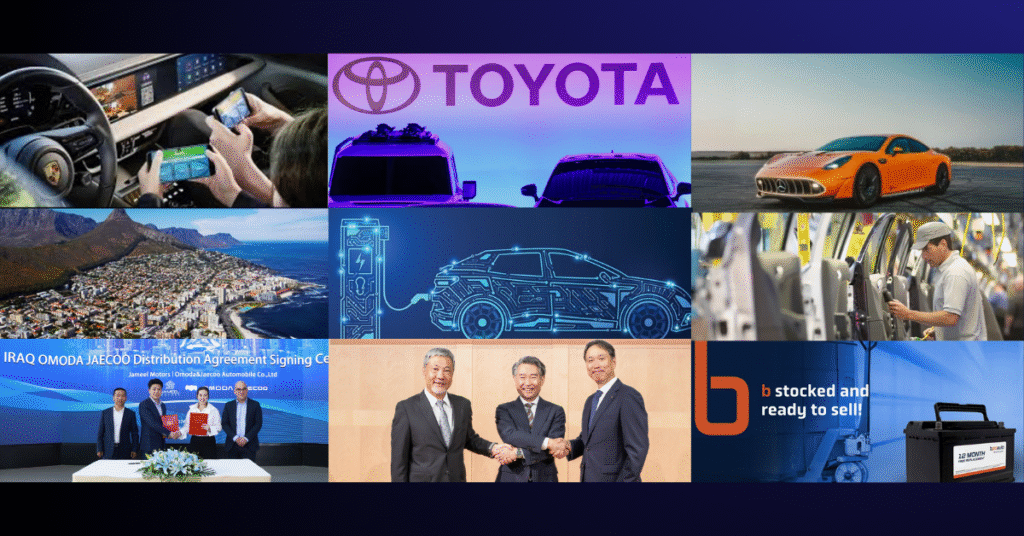
Introduction The global automotive landscape is undergoing a bold transformation, defined by record-shattering performance feats, advanced AI integration, and new standards in electrified mobility. Porsche is redefining in-car experiences with gaming and smarter AI controls, while Mercedes-AMG pushes endurance limits with its next-generation concept. At the same time, the industry faces headwinds, with tariff pressures threatening profitability for giants like Toyota, even as brands such as BYD, Hyundai, and BMW unveil breakthroughs that set fresh benchmarks in speed, design, and efficiency. Regional markets across the Middle East and Africa are also dynamic, driving forward with new launches, partnerships, and policies that reinforce their growing influence on the global stage. These developments highlight how global leaders and regional players alike are reshaping the future of mobility. Porsche Macan Enhanced with AI, Gaming & Smarter Controls Porsche’s updated all-electric Macan embraces next-generation comfort and infotainment with a revamped App Centre that turns the vehicle into an onboard entertainment console. Passengers can now access gaming (via AirConsole, Gameloft, Obscure Interactive) and media content—using a Bluetooth controller or touchscreen; an optional passenger display enables simultaneous use without distracting the driver. The enhanced Voice Pilot AI understands complex, conversational queries and includes an integrated on-board manual accessible by voice. Remote control via the My Porsche app now extends to the luggage compartments, including the front luggage compartment (frunk), when equipped with Porsche Connect. These upgrades reflect Porsche’s push towards richer digital experiences and seamless voice-driven usability. Mercedes-Benz Unveils Record-Shattering AMG GT XX Concept Mercedes-Benz’s Concept AMG GT XX has shattered endurance boundaries by covering 40,075 kilometres—the equivalent of circumnavigating the globe—in just over seven days during extreme testing at Nardò. Powered by three axial-flux motors and a direct-cooled battery, the concept also smashed the 24-hour distance record by surpassing it fourteenfold, showcasing next-generation AMG.EA drivetrain capability. Innovative features such as augmented-reality racing helmets, ergonomic 3D seat pads, illuminated paint, headlight-integrated speakers, and MBUX Fluid Light rear panels underscore AMG’s pioneering design ethos. Many of these technologies are slated to enter production in next year’s AMG.EA models. This record drive boosts Mercedes-AMG’s credentials in high-performance electrified vehicles. Tariffs forecast to deal Toyota a US $9.5 bn blow in FY2026 Toyota expects its financial year ending March 2026 operating profit to be slashed by 1.4 trillion yen (approximately US $9.5 billion), a 16 per cent reduction. This decline stems largely from increased US tariffs on vehicle imports and components, combined with rising material costs and a stronger yen. The company has adjusted its annual operating profit forecast to 3.2 trillion yen, down from 3.8 trillion yen. Despite these pressures, Toyota continues to push ahead with US production and plans a new vehicle factory in Japan. BYD’s Yangwang U9 Track Edition Sets EV Speed Record BYD’s luxury sub-brand Yangwang has set a new global EV top-speed record, with the U9 Track Edition reaching 472.41 km/h. Powered by a quad-motor platform delivering over 3,000 PS, the hypercar demonstrates extreme performance capability. Aerodynamic upgrades and a robust cooling system ensured stability at record-breaking speeds. The feat eclipses benchmarks set by leading European hypercars, reinforcing BYD’s engineering strength. It establishes Yangwang as a formidable player in the high-performance EV segment. Hyundai Teases Bold New Concept Ahead of IAA Mobility Hyundai has unveiled the first images of its upcoming concept vehicle, set to debut at IAA Mobility 2025 in Munich from 9–14 September. The design teaser hints at a fresh, electrified direction—visitors can explore it first-hand at Hyundai’s outdoor exhibit in Ludwigstraße. Over the coming days, Hyundai will release additional visuals spotlighting key design features. The concept is poised to evolve into a future IONIQ production model launching in early 2026. The phased reveal builds anticipation and underscores Hyundai’s forward-looking design strategy. Pure × McLaren Flex E-Scooter Garners Spotlight for Compact Power Pure’s new Flex e-scooter, developed in collaboration with McLaren, stands out for its ultra-compact design and high-performance engineering. It delivers a smooth, stable ride through Active Steering Stabilisation, accommodating tight urban storage needs. Powered by a 924 W motor paired with a 36 V battery, it offers up to 52 km of riding range and reaches speeds of 25 km/h. Its folding form factor—compact enough to fit into car boots or on transport racks—reflects practical urban-mobility design. The Flex blends racing-inspired flair with everyday convenience in a sleek, portable package. Mitsubishi Fuso and Foxconn Partner to Develop Zero-Emission Buses Mitsubishi Fuso and Foxconn have signed an MoU to jointly develop zero-emission buses, strengthening the Fuso bus brand. The collaboration includes their subsidiaries MFBM and Foxtron, focusing on research, production, and market expansion. Initial work will centre on Foxtron’s Model T and Model U prototypes. The agreement positions MFBM as a platform for both ICE and electrified bus operations. This alliance signals a step towards sustainable mass transit solutions across key global markets. Nissan Roox Redefines the Kei Car with Space, Style and Technology Nissan has unveiled the all-new Roox in Japan, raising standards in the kei car category. The model features a spacious, premium interior and advanced comfort innovations. It introduces a segment-first integrated 12.3-inch infotainment screen with Google built-in. Enhanced safety systems and improved efficiency strengthen its appeal to urban customers. With a refined design and upmarket feel, the Roox sets a new benchmark for compact mobility. Stellantis Introduces New Turbocharged Hybrid Powertrain Without Plug-In Requirement Stellantis has revealed a new 1.6-litre turbocharged four-cylinder hybrid engine designed for performance and efficiency. The system integrates dual motors with a hybrid control unit to balance power and economy. It will debut in the next Jeep Cherokee, delivering electrified torque alongside off-road capability. The powertrain is engineered to achieve competitive fuel efficiency without requiring external charging. This innovation underscores Stellantis’ strategy of broadening hybrid options across its portfolio. Nissan sells India plant stake to Renault for US $404 million Nissan has completed the sale of its 51 per cent stake in the Chennai-based joint venture (RNAIPL) to Renault, making the plant a fully owned Renault facility. Going forward, Nissan models will