

Automotive Industry Update March 2026: Global and MENA Market Momentum
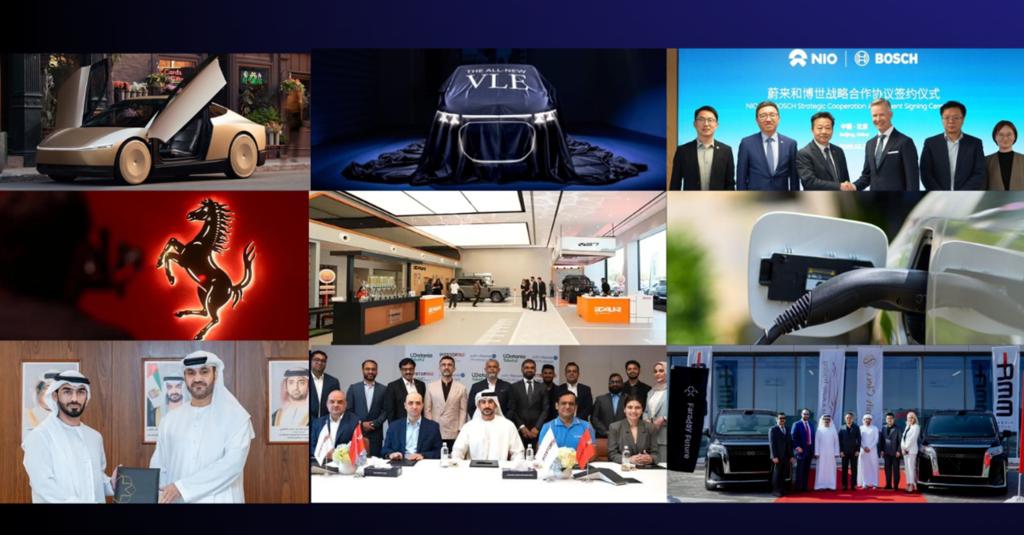
The global automotive industry closes March 2026 navigating a convergence of economic and technological pressures reshaping strategy across every major market. US tariffs continue to influence manufacturer strategy while the race to electrification accelerates — with affordable new models, open-source platforms and bold policy shifts emerging across Europe, North America, Asia and the Gulf. This month’s update covers the key developments shaping the industry’s immediate outlook and longer-term direction, with a dedicated focus on the Middle East and Africa region where momentum remains notably strong. Global Market Overview BMW Seeks Minimum Import Price Path for China-Built Mini EVs BMW is pursuing a minimum import price arrangement as an alternative to EU tariffs on China-built electric Minis. The proposal aligns with wider discussions around “price minimum” frameworks for Chinese EV imports. If implemented, it would protect Mini margins without relying solely on cost pass-through to consumers. The development shows how trade policy is increasingly shaping sourcing strategy, pricing structures and model allocation. Other OEMs importing China-manufactured EVs into Europe may face similar pressure. NIO and Bosch Sign Strategic Cooperation Covering All Three NIO Brands NIO and Bosch have signed a strategic cooperation agreement spanning NIO, ONVO and firefly, deepening collaboration across core smart EV technologies. The announcement coincided with a high-level China–Germany engagement period, underscoring ongoing industrial alignment. The agreement signals sustained German supplier confidence in China’s EV platform scale. Competitive advantage increasingly rests on software capability, systems integration and disciplined execution. Cross-border supplier partnerships remain central to next-generation EV development. Audi Appoints Vito Paladino to Lead Audi of America from 1 April 2026 Audi has appointed Vito Paladino as President of Audi of America and Head of the North America Region effective 1 April 2026. The move forms part of wider leadership adjustments across key markets. Execution strength is being prioritised as competitive pressure intensifies. North America remains strategically vital for retail momentum and brand positioning. Leadership changes at this level signal renewed operational focus. Tesla Cybercab Programme Lead Departs Shortly After First Unit Production Reports indicate the Cybercab programme manager has departed shortly after the first production unit was completed at Giga Texas. The milestone sits within Tesla’s broader robotaxi ambitions. Leadership turnover at this stage draws attention to programme stability and delivery discipline. Regulatory approval remains the decisive hurdle for full autonomy deployment. Market confidence will hinge on operational continuity and safety validation. Hyundai Steps Towards Saemangeum “AI + Hydrogen” Hub Vision Hyundai Motor Group is backing major investment in Saemangeum linked to an AI data centre, robotics capability and hydrogen infrastructure. The initiative includes a significant GPU-based facility alongside hydrogen production components. The strategy reinforces Hyundai’s narrative around autonomy, robotics and energy convergence. Saemangeum is being positioned as an integrated industrial cluster. The approach reflects long-term capability building rather than short-term signalling. Toshiba Launches Compact Device for Safer Automotive Power Control Toshiba has introduced a compact ideal diode controller designed to strengthen automotive power control reliability. The device provides reverse polarity protection and current blocking in space-constrained applications. The focus is on redundancy and resilience within increasingly complex electrical architectures. Stable power management underpins software-defined vehicle performance. Electrical robustness is becoming a core requirement in next-generation platforms. Archer to Install Starlink Connectivity in Air Taxis Archer Aviation plans to integrate Starlink satellite connectivity into its electric air taxi aircraft. The technology aims to provide high-speed internet and real-time communication capabilities during urban air mobility operations. Reliable connectivity is essential for flight management, passenger services and safety monitoring. Collaboration between aerospace innovators and satellite technology providers is accelerating development in the emerging air mobility sector. The initiative reflects the expanding ecosystem supporting next-generation transportation. Mercedes-Benz Unveils Electric VLE at World Premiere in Stuttgart Mercedes-Benz staged the world premiere of its all-electric VLE on 10 March in Stuttgart, launching the first model built on the new VAN.EA dedicated electric van architecture. The VLE combines a limousine-like ride with MPV versatility, offering up to eight seats and targeting family, leisure and premium shuttle buyers. Entry-level variants produce 268 horsepower while higher trims reach 470 hp, with battery options spanning 90 to 120 kWh. All-wheel steering delivers a compact turning circle suited to urban environments. Level 3 autonomous driving capability and over-the-air software updates feature across the range. The event included a public livestream as Mercedes-Benz confirmed the model will be sold in the United States alongside European markets. The VLE replaces the V-Class and EQV and will be offered exclusively with electric propulsion, marking a decisive shift for the brand’s premium van portfolio. Hyundai Records Best-Ever February as IONIQ 5 Sales Surge 33% Hyundai Motor America reported record-breaking February 2026 sales, driven by a 33 per cent year-on-year increase in IONIQ 5 deliveries to 3,329 units. Cumulative IONIQ 5 sales for the first two months of 2026 stand at 5,365 units, up 14 per cent. The strong performance was supported by aggressive pricing incentives including a $10,000 discount on 2026 model year vehicles, alongside zero per cent financing over 72 months. With prices now starting from $35,000, the IONIQ 5 is positioned as one of the most affordable EVs in the United States. Hyundai is targeting a sixth consecutive year of record sales in 2026, with electrified models providing the primary growth driver. The results contrast with broader US EV market declines, demonstrating that competitive pricing remains a critical tool for maintaining demand in a post-incentive landscape. US Auto Market Slows to 15.8M SAAR as Tariff Pressure Bites in February The United States automotive market registered a seasonally adjusted annual rate of 15.8 million units in February 2026, slightly below the prior-year pace as tariff-related affordability pressures begin to suppress demand. Cox Automotive has maintained its full-year forecast of approximately 15.8 million units, representing a 2.4 per cent decline from 2025 levels. Fuel prices jumped over 13 per cent in the past week to $3.46 per gallon, adding a further headwind for consumers evaluating vehicle purchases. Incentive spending increased to 6.9 per cent of average transaction price in February,
Global and MENA Automotive Industry Update – February 2026: Electrification, Autonomy and Strategic Market Shifts
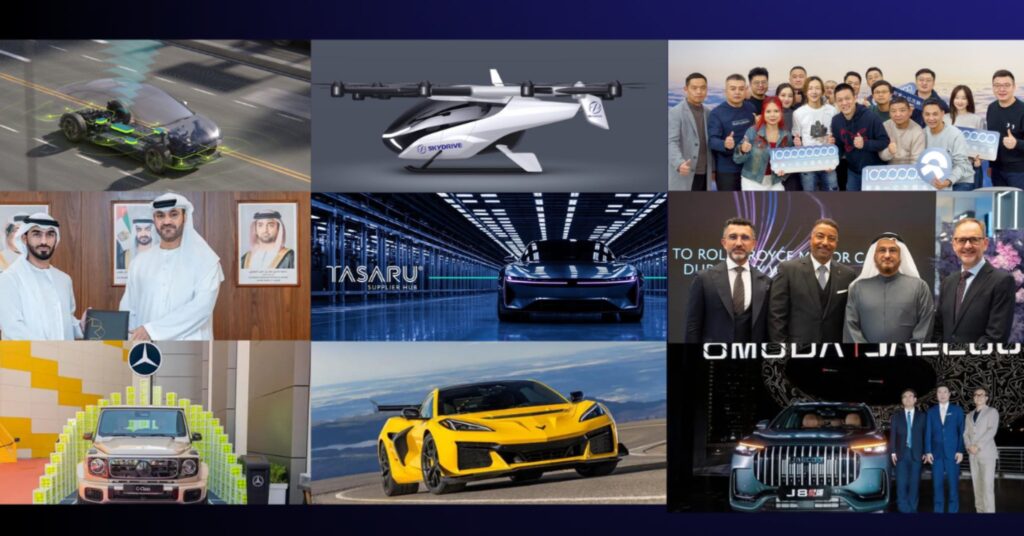
Insights into the trends driving change across the global and MENA automotive markets The global and MENA automotive industry continues to evolve at pace, shaped by electrification, autonomous mobility, artificial intelligence, trade policy shifts and changing customer expectations. From Tesla’s major robotics investment and Volkswagen’s software-led architecture strategy to Abu Dhabi’s autonomous logistics trials and rising regional showroom expansion, the sector is entering a new phase of transformation. Across both mature and emerging markets, manufacturers, distributors and mobility players are redefining growth through technology, localisation, retail reinvention and ecosystem partnerships. This automotive industry update highlights the most significant global and regional developments influencing OEM strategy, market competitiveness, aftersales performance, mobility innovation and long-term industry direction. For businesses operating across the Middle East and the wider international automotive landscape, these developments provide valuable insight into where momentum is building and where strategic focus is increasingly required. Global Market Overview Tesla Commits US$20bn to Robotics as Premium Models Are Axed Tesla has announced a US$20bn investment in robotics, reinforcing its long-term focus on automation and AI-driven systems. The decision coincides with the discontinuation of the Model S and Model X in several markets, signalling a strategic reprioritisation. Capital is increasingly being redirected away from legacy vehicle lines towards future technologies. The move underscores Tesla’s ambition to extend beyond automotive manufacturing. Execution risk remains as spending scales rapidly ahead of clear commercial returns. UK Vehicle Production Falls to 73-Year Low in 2025 UK vehicle production has declined to its lowest level since 1952, reflecting sustained structural and economic pressures. Output has been impacted by weak domestic demand, model changeovers and reduced export volumes. Electrification investment continues but has yet to offset near-term contraction. Industry leaders warn of competitiveness challenges without policy support. Recovery is expected to remain gradual rather than cyclical. Honda Trials Road Monitoring System with Ohio DOT Honda has launched a road condition monitoring trial in partnership with the Ohio Department of Transportation. The system uses vehicle-based sensors to detect surface degradation and hazards. Data-driven maintenance planning is expected to improve safety and efficiency. The trial highlights the growing role of connected vehicle data in infrastructure management. Wider deployment will hinge on data governance frameworks. Volkswagen Begins Production of China Zonal Architecture Volkswagen has started production using a new zonal electrical architecture in China. The approach simplifies vehicle wiring and supports faster software integration. China remains a lead market for VW’s digital transformation. Localised architectures are becoming central to competitiveness. Broader global adoption is expected over time. Stellantis Demands 25% US Sales Growth from Dealers in 2026 Stellantis has instructed US dealers to deliver 25% sales growth in 2026, signalling a more aggressive retail performance agenda. The target reflects mounting pressure to defend market share amid intensifying competition. Dealers face heightened expectations around execution, pricing discipline and customer conversion. The move may strain weaker retail networks already navigating margin compression. Outcomes will depend on dealer capability and market conditions. SkyDrive to Conduct eVTOL Demonstration Flights in Tokyo SkyDrive plans to conduct eVTOL demonstration flights in Tokyo. The trials support Japan’s advanced air mobility roadmap. Public acceptance remains a key hurdle. Demonstrations aim to build confidence ahead of commercial rollout. Regulatory milestones remain decisive. NIO Reaches 100 Million Battery Swap Milestone NIO has completed its 100 millionth battery swap, demonstrating scale in a unique energy model. The milestone strengthens battery swapping as a habitual customer proposition rather than a trial concept. Profitability depends on station utilisation, network economics and capex discipline. The model supports loyalty through speed, convenience and predictable replenishment. Expansion pace versus returns will determine long-term sustainability. Ferrari Unveils Interior of “Luce” Electric Vehicle Ferrari has revealed interior design direction for its first electric vehicle, “Luce.” The cabin approach signals brand-led differentiation rather than screen-first minimalism. Luxury tactile quality and craftsmanship remain central to the value proposition. The reveal reinforces Ferrari’s intent to protect exclusivity in an electrified era. Market reception will hinge on performance credentials, range architecture and brand loyalist response. Volvo Eyes Chinese EV Imports to Canada After Tariff Cut Volvo is assessing the import of Chinese-built EVs into Canada following tariff reductions. Lower trade barriers may improve pricing competitiveness. The move reflects broader sourcing flexibility within global EV supply chains. Canadian consumer demand for affordable electric vehicles remains strong. Regulatory shifts are reshaping regional import dynamics. BMW Seeks Minimum Import Price Path for China-Built Mini EVs BMW is pursuing a minimum import price arrangement as an alternative to EU tariffs on China-built electric Minis. The proposal aligns with wider discussions around “price minimum” frameworks for Chinese EV imports. If implemented, it would protect Mini margins without relying solely on cost pass-through to consumers. The development shows how trade policy is increasingly shaping sourcing strategy, pricing structures and model allocation. Other OEMs importing China-manufactured EVs into Europe may face similar pressure. Hyundai Steps Towards Saemangeum “AI + Hydrogen” Hub Vision Hyundai Motor Group is backing major investment in Saemangeum linked to an AI data centre, robotics capability and hydrogen infrastructure. The initiative includes a significant GPU-based facility alongside hydrogen production components. The strategy reinforces Hyundai’s narrative around autonomy, robotics and energy convergence. Saemangeum is being positioned as an integrated industrial cluster. The approach reflects long-term capability building rather than short-term signalling. Regional Highlights Abu Dhabi Launches Pilot Operation of Autonomous Trucks in Logistics Sector Abu Dhabi’s Integrated Transport Centre has overseen a supervised pilot of autonomous trucks within industrial logistics environments, described as a regional first. The initiative involves collaboration with Autotech and AD Ports Group in KEZAD. The focus is on safety validation and operational performance assessment. Freight autonomy is advancing ahead of consumer applications in the region. Regulatory learning from such pilots will shape future deployment economics. DDS Partners with Thrifty and Dollar to Enable Paperless Leasing Collections DDS has partnered with Thrifty and Dollar to modernise leasing authorisation and collections through digitised processes. The objective is faster reconciliation and improved portfolio management efficiency. Fleet and rental operators in the UAE continue to prioritise end-to-end
The Aftersales Reality: Why EV Readiness Will Decide Winners in MENA

Electric vehicles are moving from early adoption to meaningful scale across the Middle East. While EV sales growth attracts headlines, it is aftersales capability that will ultimately determine which OEMs, Dealers and Importers succeed and which quietly fall behind. The real disruption of electrification will not happen in the showroom. It will happen in the workshop. EV Growth in the GCC and What It Means for Workshop Volumes EV penetration in the GCC remains relatively low in absolute terms, but growth rates are accelerating rapidly. Over the last three years, EV and plug-in hybrid registrations in the UAE have increased more than fourfold, while Saudi Arabia is following a similar trajectory from a smaller base. For aftersales operations, this shift is not about volume reduction. It is about volume transformation. EVs eliminate many routine mechanical jobs associated with internal combustion vehicles. At the same time, they introduce new categories of work: high-voltage diagnostics, battery health checks, thermal management systems, software updates, calibration, and safety compliance. As EV parc size grows, workshops will experience: Fewer low-value, high-frequency jobs More diagnostics-led labour Greater dependency on software and data interpretation Higher safety, training, and compliance requirements Workshops that fail to adapt will not see lower volumes. They will see lower productivity and rising customer dissatisfaction. The Real Economics of EV Aftersales Versus ICE A common assumption is that EVs are inherently negative for aftersales profitability. This is incorrect. ICE vehicles generate frequent service visits driven by consumables. EVs generate fewer visits, but when managed correctly, those visits are more technical, higher value, and more margin-protected. The determining factor is execution. EV-ready operations benefit from: Higher effective labour rates for specialist work Reduced parts complexity and inventory burden Predictable maintenance patterns Stronger retention driven by safety and trust Unprepared operations experience the opposite: Longer diagnosis times Technician dependency bottlenecks Escalations to OEMs for routine issues CSI and NPS deterioration EV aftersales is not unprofitable by nature. It becomes unprofitable when readiness is weak. Skills, Tooling and Diagnostic Gaps in Dealer Networks Across MENA, EV readiness remains inconsistent. The most common gaps observed include: Skills EV capability is often concentrated in a small number of technicians. This creates bottlenecks, operational risk, and inconsistent service quality. Certification exists, but structured capability building often does not. Tooling Many workshops possess EV tools but lack confidence and discipline in their use. Safety infrastructure is frequently incomplete or underutilised. Diagnostics EV fault resolution is increasingly software-led. Without structured diagnostic workflows and data interpretation capability, first-time fix rates suffer and cycle times increase. These gaps will widen as EV volumes grow unless addressed systematically. Software, Data and Customer Experience: The New Battleground EV aftersales is as much a digital challenge as a mechanical one. Customers expect faster diagnosis, clearer communication, and transparency enabled by connected vehicle data. Over-the-air updates and remote diagnostics are redefining service expectations. Three shifts are already visible: Speed and transparency are becoming non-negotiable Data ownership defines customer control Service experience now directly shapes brand perception Aftersales has moved from a back-office function to a frontline brand differentiator. A 24-Month EV Aftersales Readiness Roadmap EV readiness requires structure, not improvisation. Phase 1: Foundation (0–6 months) Assess EV parc growth, audit workshop safety and tooling, identify skill gaps, and define EV service processes. Phase 2: Capability Build (6–12 months) Train and certify technicians, standardise diagnostics, implement EV labour pricing, and align parts planning. Phase 3: Optimisation (12–18 months) Improve first-time fix rates, integrate software diagnostics, enhance customer communication, and refine warranty governance. Phase 4: Differentiation (18–24 months) Position EV aftersales as a trust advantage, use data to drive retention, and integrate EV service into the brand promise. Organisations that complete this journey early will protect profitability and customer loyalty as EV adoption accelerates. THE AMENA VIEW The EV transition in MENA will not be won in showrooms. It will be won in workshops. As EV-focused OEMs increase their regional presence, aftersales capability becomes the ultimate credibility test. Customers may accept a new brand. They will not accept poor service. At AMENA, we view EV readiness as an execution challenge, not a technology challenge. Sales growth without aftersales capability is unsustainable. The winners of the next decade will be those who invest early, train deeply, and redesign aftersales around the realities of electrified vehicles. At AMENA, we partner with OEMs, Dealers and Importers across the MENA region to turn market disruption into operational advantage. Our work spans Sales performance, Aftersales operations, Parts profitability, CSI and NPS improvement, and end-to-end Customer Experience transformation. As EV adoption accelerates, we support leadership teams with EV readiness diagnostics, workshop optimisation, process redesign, pricing discipline, and customer journey transformation. In a market where aftersales capability will define winners, AMENA helps automotive organisations move from intent to execution with clarity and confidence. Visit www.amenaauto.me to discover how our tailored solutions can transform your dealership’s approach to performance measurement and management. Contact Us Today! office@amenaauto.me Follow us @ Linkedin | Youtube| Instagram | Facebook We express our sincere gratitude to all the veterans and experienced professionals in the automotive industry for their valuable input and advice when we write our articles. We take pride in our commitment to embracing technology, including AI, to enhance the quality of our articles.
Global and MENA Automotive Industry January 2026 Update: EVs, Autonomy, AI and Market Shifts
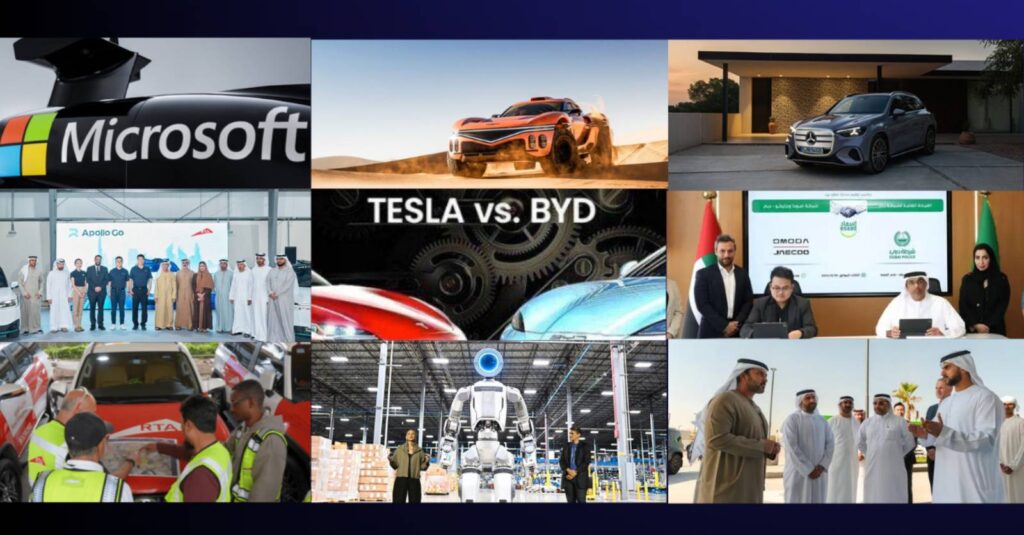
Global Automotive Industry Overview Introduction The global automotive industry continues to navigate a period of accelerated transformation, shaped by rapid advances in automation, software integration and electrification, alongside shifting manufacturing realities and evolving regulatory frameworks. Strategic priorities across OEMs are increasingly influenced by capital allocation decisions, digital capability development and the need to balance innovation with operational resilience. At the same time, markets across the Middle East and Africa are emerging as important centres for mobility innovation, infrastructure deployment and new brand activity. From autonomous testing and EV ecosystem expansion to retail network growth and policy reform, regional developments are reinforcing the importance of execution, localisation and long-term market readiness. The following updates capture the key global and regional developments shaping the automotive landscape. Tesla Commits US$20bn to Robotics as Premium Models Are Axed Tesla has announced a US$20bn investment in robotics, reinforcing its long-term focus on automation and AI-driven systems. The decision coincides with the discontinuation of the Model S and Model X in several markets, signalling a strategic reprioritisation. Capital is increasingly being redirected away from legacy vehicle lines towards future technologies. The move underscores Tesla’s ambition to extend beyond automotive manufacturing. Execution risk remains as spending scales rapidly ahead of clear commercial returns. UK Vehicle Production Falls to 73-Year Low in 2025 UK vehicle production has declined to its lowest level since 1952, reflecting sustained structural and economic pressures. Output has been impacted by weak domestic demand, model changeovers and reduced export volumes. Electrification investment continues but has yet to offset near-term contraction. Industry leaders warn of competitiveness challenges without policy support. Recovery is expected to remain gradual rather than cyclical. Volkswagen Begins Production of China Zonal Architecture Volkswagen has started production using a new zonal electrical architecture in China. The approach simplifies vehicle wiring and supports faster software integration. China remains a lead market for Volkswagen’s digital transformation. Localised architectures are becoming central to competitiveness. Broader global adoption is expected over time. Genesis Unveils X Skorpio Off-Road Concept Genesis has revealed the X Skorpio off-road concept vehicle. The design explores rugged capability alongside luxury positioning. Concept vehicles continue to test brand elasticity. Market response will inform future product direction. Production intent has not been confirmed. Cupra Joins VW Group Road Safety Data Initiative Cupra has joined the Volkswagen Group’s road safety data-sharing programme. Vehicle-generated data will support hazard identification. Connected data ecosystems are expanding across OEM groups. Privacy and data governance remain central concerns. The initiative reinforces collaborative safety efforts. Mercedes-Benz to Debut Electric GLC at CES 2026 Mercedes-Benz will unveil the electric GLC at CES 2026, signalling a major step in electrifying one of its most commercially important SUV lines. The model is expected to showcase advances in efficiency, digitalisation and software integration. Mercedes continues to reposition CES as a technology-led platform rather than a traditional motor show. The electric GLC will play a central role in the brand’s mid-size EV strategy. Its debut underscores the shift toward tech-centric vehicle launches. XPeng and Peking University Paper Accepted by AAAI XPeng and Peking University have had a joint research paper accepted by the AAAI conference, highlighting progress in AI-driven mobility research. The collaboration underscores XPeng’s focus on software, algorithms and intelligent driving systems. Academic partnerships are becoming increasingly important in autonomous development. The recognition enhances XPeng’s credibility in global AI research circles. It also supports China’s broader push into advanced automotive AI. Golf GTI Turns 50 as Volkswagen Unveils Electric GTI Volkswagen has marked the 50th anniversary of the Golf GTI by unveiling an electric GTI concept. The move signals the brand’s intent to carry performance heritage into the electric era. Electrification is being positioned as an evolution rather than a departure from GTI identity. The concept reinforces Volkswagen’s commitment to emotional, driver-focused EVs. It also previews how iconic sub-brands may transition to electric platforms. BYD Surpasses Tesla in 2025 EV Sales BYD has reportedly surpassed Tesla in global EV sales in 2025, marking a significant industry milestone. The shift reflects BYD’s strength across multiple price segments and regions. Vertical integration and domestic scale have supported sustained growth. Tesla remains strong in premium and technology perception, but competition is intensifying. The development underscores China’s growing influence in the global EV market. Cadillac Concept Receives International Design Recognition Cadillac’s Elevated Velocity concept has received international recognition through a major design award. Judges cited innovation, proportion and future-focused design language. The accolade supports Cadillac’s premium repositioning strategy within its electric portfolio. Design cues from the concept may influence future production models. The recognition reinforces the role of design leadership as a competitive differentiator. Hyundai Union Warns Humanoid Robots Could Threaten Jobs Hyundai’s labour union has raised concerns that humanoid robots could displace manufacturing jobs. The warning highlights growing tension between automation ambitions and workforce security. Labour relations remain sensitive as automation accelerates. Balancing innovation with employment protection will be critical. Union response is likely to shape the pace of adoption. Microsoft to Provide Cloud and AI Support for Mercedes Formula One Microsoft will provide cloud and artificial intelligence solutions to support Mercedes Formula One operations. The partnership enhances data processing, simulation and performance analytics. Technology integration continues to play a decisive role in motorsport competitiveness. The collaboration reflects growing crossover between enterprise technology and automotive performance. AI capability is increasingly viewed as a strategic advantage. Honda Earns First North America Carbon Certification Honda has secured its first carbon certification in North America, highlighting progress in emissions reduction and sustainability reporting. The certification recognises manufacturing and operational improvements across selected facilities. Honda continues to position itself as a leader in pragmatic decarbonisation rather than rapid electrification alone. The move supports regulatory compliance and brand credibility. Sustainability credentials are becoming increasingly influential in fleet and consumer purchasing decisions. Volvo EX60 to Debut with Google Gemini AI Assistant Volvo has confirmed the EX60 will debut with Google’s Gemini AI assistant integrated into the vehicle interface. The move enhances voice interaction, contextual intelligence and in-car digital services. Volvo continues to deepen
Why Evidence-Based Executive Assessment Is Now Essential for Automotive Businesses in the MENA Region

The Leadership Challenge Facing Automotive Businesses Today The Automotive industry across the Middle East and North Africa is undergoing profound transformation. Electrification, digital retailing, evolving customer expectations, and intensifying competition from new market entrants are reshaping the landscape at an unprecedented pace. Yet amidst this disruption, one challenge consistently rises to the top of boardroom agendas: finding, evaluating, and developing the right leadership talent. For family-owned Automotive groups, which represent the majority of Dealers/Importers across the GCC, the stakes are particularly high. These businesses often navigate complex dynamics: multi-generational ownership transitions, the professionalisation of management structures, and the delicate balance between family governance and operational excellence. A single mis-hire at the executive level can cost far more than salary and severance; it can disrupt strategic momentum, erode team morale, and damage hard-won customer relationships. The traditional approach to executive hiring, relying on CVs, interviews, and gut instinct, is no longer sufficient. In an industry where the difference between thriving and merely surviving often comes down to leadership quality, Automotive businesses need a more rigorous, evidence-based approach to talent decisions. The True Cost of Getting It Wrong Research consistently demonstrates that executive mis-hires rank among the most expensive mistakes an organisation can make. Industry studies suggest that the cost of a failed senior appointment can range from two to five times the individual’s annual compensation when factoring in recruitment costs, onboarding investment, lost productivity, and the disruption caused by subsequent departure. In the Automotive sector, these costs are amplified by the relationship-intensive nature of the business. A General Manager who fails to connect with OEM partners, a Sales Director who cannot inspire a multicultural sales team, or a Service Director who misunderstands the nuances of customer expectations in the region, each represents not just a failed appointment but a missed opportunity during a critical period of industry evolution. Beyond direct financial impact, leadership failures create ripple effects throughout the organisation. High-performing team members become disengaged. Customer experience suffers. Strategic initiatives stall. The reputational damage — both internally and in the market — can take years to repair. Why Traditional Assessment Methods Fall Short The conventional executive selection process typically relies on three pillars: resume review, reference checks, and interviews. Each has inherent limitations that become more pronounced in the MENA Automotive context. Resumes tell you what someone has done, not how they did it or whether they can replicate that success in a different environment. A track record of achievement with a European OEM does not guarantee success navigating the relationship dynamics of a family-owned Gulf dealership. References, meanwhile, are almost universally positive; few candidates provide contacts who will offer critical perspectives. Interviews, despite their ubiquity, remain remarkably poor predictors of job performance. Research in organisational psychology has repeatedly shown that unstructured interviews add little predictive value beyond what can be gleaned from a resume. Interviewers are susceptible to cognitive biases: favouring candidates who remind them of themselves, overweighting first impressions, and confusing confidence with competence. In multicultural environments, where a single Automotive group might employ team members from dozens of nationalities, these limitations become even more pronounced. Cultural presentation styles vary enormously, and what reads as confidence in one culture may appear as arrogance or reservation in another. The Case for Evidence-Based Assessment Evidence-based executive assessment addresses these limitations through a structured, multi-method approach that combines psychometric profiling, competency-based interviewing, and behavioural analysis. The goal is not to replace human judgment but to inform it, providing objective data points that complement experiential evaluation. Psychometric assessment, when conducted using validated instruments, offers insights into personality traits, cognitive abilities, and behavioural preferences that are difficult to discern through interviews alone. Tools such as the HEXACO personality model provide a nuanced understanding of how individuals are likely to behave under pressure, collaborate with others, and respond to the ambiguity that characterises executive roles. Team role assessments, such as the Belbin methodology, illuminate how candidates are likely to function within existing leadership teams, a critical consideration when appointing into established executive groups. Understanding whether a candidate naturally gravitates toward coordination, implementation, or innovation can inform both selection decisions and onboarding strategies. Structured competency interviews, using methodologies such as STAR (Situation, Task, Action, Result), move beyond hypothetical questioning to examine specific examples of past behaviour. When conducted rigorously across fifteen or more competency areas, these interviews provide a detailed picture of how candidates have actually performed in situations analogous to those they will face in the new role. Perhaps most valuably, evidence-based assessment includes self-awareness analysis: comparing candidates’ self-perceptions against objective measures and interviewer observations. This triangulation reveals not just capability but candour, a quality that proves essential for executives navigating complex stakeholder environments and acknowledging limitations openly. Why Regional Context Matters Assessment methodologies developed in Western corporate environments do not translate directly to the MENA region. Cultural norms around communication, hierarchy, and relationship-building differ significantly, and effective assessment must account for these differences. Family business dynamics add another layer of complexity. Executives joining family-owned groups must navigate relationships with family shareholders, balance professional management practices with ownership expectations, and often operate within governance structures that differ markedly from publicly listed corporations. Understanding a candidate’s capacity to thrive in these environments requires assessors with direct experience of family business contexts. The multicultural nature of Automotive teams across the Gulf presents additional considerations. Effective leaders must demonstrate cultural intelligence — the ability to work effectively across national and ethnic boundaries, adapting communication and management styles to diverse team compositions. Assessment processes must specifically evaluate this capability, not assume it from international experience alone. From Selection to Development While executive selection represents the most visible application of assessment, the methodology delivers equal value in talent development and succession planning contexts. For high-potential leaders being groomed for senior roles, psychometric profiling and competency assessment identify specific development needs — enabling targeted investment in coaching, training, and experiential learning. For organisations navigating leadership transitions, whether generational succession in family businesses or restructuring following acquisition, assessment provides the objective
Chinese Automakers: From Global Export Surge to MENA Market Transformation

The global automotive industry is undergoing one of the most significant structural shifts of the past three decades Chinese automakers have moved from being largely domestically focused manufacturers to becoming the fastest-growing vehicle exporters in the world, reshaping competitive dynamics across multiple regions. Export momentum is now translating into tangible market disruption across MENA, where demand for technology-rich SUVs and electrified portfolios is accelerating faster than many legacy networks can adapt. China’s Export Surge Rewrites the Global Competitive Landscape In 2019, China exported approximately 1.0 million vehicles. By 2023, exports had increased to 4.9 million units. In 2024, export volumes reached approximately 5.8 million vehicles, representing a compound annual growth rate of more than 40% over five years. Based on confirmed production capacity, logistics throughput and order pipelines, exports in 2025 are tracking towards 6.6 to 6.9 million units. This rate of expansion is historically unprecedented, with no major automotive exporting nation scaling international shipments at this speed within a comparable timeframe. What Is Driving the Export Acceleration Two structural forces sit behind the surge. First, China’s domestic automotive market has entered a phase of extreme competition, with well over 100 active vehicle brands competing for share. Price pressure has intensified, margins have compressed, and export growth has become a requirement to sustain scale utilisation and financial viability. Second, Chinese OEMs have reached a level of product, manufacturing and operational maturity that enables them to compete globally. Platforms are now developed with international markets in mind, allowing regulatory compliance, localisation and cost optimisation to be engineered at design stage rather than retrofitted later. Global Expansion Beyond North America Chinese brands remain largely absent from the United States. Outside North America, however, expansion has been rapid and measurable. In markets such as Mexico, Chinese manufacturers now account for more than one-fifth of new vehicle imports. In the United Kingdom, Chinese brands have reached approximately 13% of new vehicle registrations, driven primarily by SUVs and electrified models. Australia, Southeast Asia and parts of Eastern Europe show similar patterns, with Chinese brands moving from negligible presence to mid-single or low-double-digit market share within three to five years. This growth is broad-based rather than concentrated, spanning passenger cars, SUVs, pickups, light commercial vehicles and premium-positioned electric models. Speed as a Competitive Advantage One of the defining differentiators of Chinese manufacturers is development speed. Typical vehicle development cycles in China now range between 24 and 36 months, compared with 48 to 60 months for many legacy manufacturers. High levels of vertical integration — particularly in batteries, power electronics and software — enable faster iteration, lower cost volatility and tighter control over innovation timelines. As a result, vehicles entering global markets often include advanced digital interfaces, over-the-air update capability and driver assistance systems as standard equipment, raising customer expectations across multiple price segments. Electrification as a Structural Edge Electrification is central to China’s competitive position. In 2024, new energy vehicles accounted for approximately 52% of all new vehicle sales in China. Chinese manufacturers control a dominant share of global battery production capacity and much of the associated supply chain, translating into battery pack cost advantages estimated at 20–30% lower than many non-Chinese competitors. For export markets, this enables Chinese EVs to be priced competitively while preserving margin, accelerating adoption in regions where affordability has previously constrained demand. From Global Momentum to the MENA Market The Middle East and North Africa is emerging as one of the most strategically important regions within China’s export strategy. The region aligns closely with Chinese OEM strengths, including strong demand for SUVs and crossovers, high acceptance of technology-rich vehicles, importer-led market structures enabling faster brand establishment, and government-backed mobility and electrification agendas. As a result, Chinese vehicle imports into key MENA markets have grown at double-digit annual rates since 2021. From near-zero presence five years ago, Chinese brands are now estimated to account for 12–15% of new vehicle sales in parts of the GCC. The UAE and Saudi Arabia function as anchor markets, both in volume and regional influence, with expansion radiating into neighbouring markets. Electrification Gains Commercial Relevance in MENA Electric vehicle adoption in MENA is moving from pilot phase to early scaling. Between 2021 and 2024, EV and plug-in hybrid registrations in the UAE increased more than fourfold. Saudi Arabia is following a similar trajectory from a smaller base, supported by infrastructure rollout, fleet electrification initiatives and regulatory clarity. Chinese manufacturers are well positioned to benefit by offering EVs and plug-in hybrids across multiple price points, often with higher specification levels than established competitors. In a region where diesel passenger cars are largely absent and fuel pricing is no longer the primary purchase driver, electrification is becoming commercially viable earlier than many expected. Implications for Dealers and Importers For dealers and importers, the rise of Chinese OEMs presents both opportunity and pressure. Opportunities include accelerated volume growth, access to competitive electrified portfolios and flexible commercial structures. Pressures include intensified price competition, rising customer expectations around technology, and the need to upgrade aftersales capability to support software-driven and electrified vehicles. Aftersales readiness is becoming decisive: EV-capable workshops, trained technicians, parts availability and digital diagnostics are no longer optional for long-term competitiveness. The AMENA View Chinese OEM expansion is now a structural feature of the global automotive market, not a cyclical export spike. The export curve is being sustained by three durable advantages: scale economics, battery and software integration, and speed of product renewal. For MENA, this is not an abstract global story — it is already changing the rules of competition in key GCC markets. From a regional operator’s perspective, outcomes over the next five years will be determined less by brand heritage and more by execution discipline. Portfolio Architecture Dealers and importers must make deliberate choices about which segments they intend to win in and build coherent line-ups around those battlegrounds. A passive “add a Chinese brand and see” approach will erode positioning and residual values. Aftersales Capability as a Growth Constraint The ceiling for
Global and MENA Automotive Industry December 2025 Update: EV Strategy Shifts, Autonomous Mobility & Software-Defined Vehicles
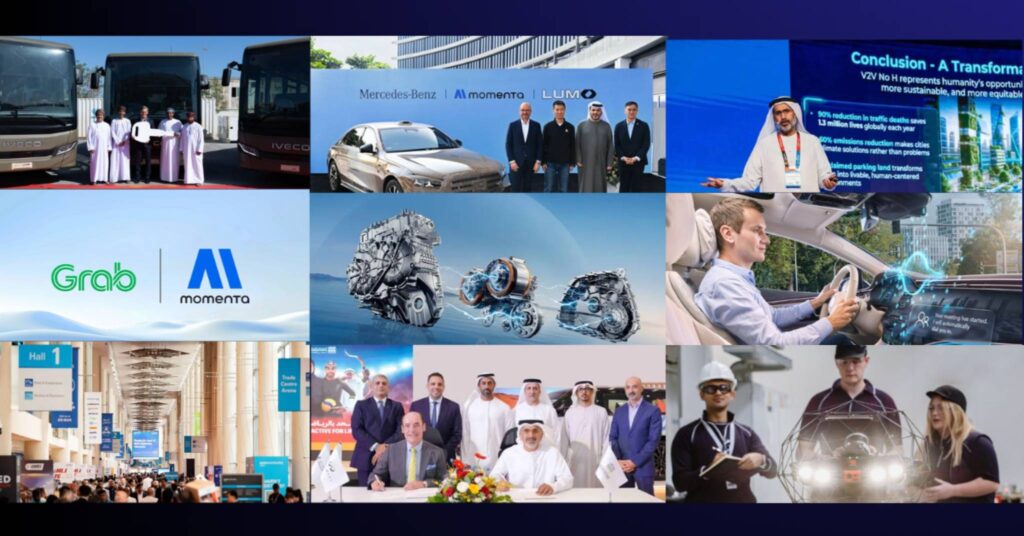
Introduction As the global automotive industry pushes deeper into 2026 planning cycles, momentum is concentrating around three forces: autonomy moving from pilots to scalable services, electrification strategies becoming more selective and market-specific, and software-defined platforms reshaping how value is created across the vehicle lifecycle. OEMs and suppliers are no longer competing on hardware alone—AI cockpits, digital services, battery circularity and data-driven operations are increasingly defining brand differentiation, margin protection and long-term customer loyalty. In parallel, the Middle East & Africa are evolving from adoption markets into active testbeds for next-generation mobility. From Dubai’s robotaxi progress and premium experience-led retail expansion, to Saudi Arabia’s accelerating electrification and talent-development agenda, the region is attracting global partnerships and investment across EV infrastructure, autonomy deployment and advanced aftermarket capability. This update captures the most important global and regional signals shaping the automotive landscape—where strategic alliances, regulatory direction and execution readiness will determine who leads the next phase of mobility transformation. Momenta, Grab Team Up to Scale Autonomous Driving in Southeast Asia Momenta and Grab announced a strategic partnership to accelerate autonomous driving deployment across Southeast Asia. Grab’s strategic investment in Momenta signals deeper integration beyond pilot programmes, reflecting Chinese autonomous-driving firms’ overseas expansion as domestic competition intensifies. For Grab, the partnership strengthens its long-term roadmap toward hybrid mobility models combining human, remote and autonomous operations. Bosch Targets €2bn in AI Cockpit Sales by 2030 Bosch set an ambition to generate €2bn in annual revenue from AI-enabled cockpit systems by 2030. The strategy focuses on intelligent, software-led in-car experiences as the cockpit becomes a central value battleground in software-defined vehicles. Rising OEM demand for scalable digital platforms underpins the shift toward recurring software and services revenue. Mercedes-Benz to Premiere All-Electric VLE in 2026 Mercedes-Benz confirmed the all-electric VLE will debut in March 2026, representing a flagship step in its electric van strategy. Premium MPVs and people-movers are gaining importance as Mercedes aims to assert leadership in electric vans. The launch will set future design and technology direction for the segment. BMW Opens Battery Recycling Centre in Bavaria BMW opened a battery recycling facility in Bavaria to support material recovery and circular-economy objectives. The centre strengthens supply-chain resilience as battery lifecycle responsibility gains regulatory focus. The move aligns sustainability goals with long-term industrial strategy. China Moves to Curb EV Price Wars Through Draft Regulatory Reforms Chinese regulators have drafted new rules aimed at ending aggressive EV price competition that has compressed margins across the industry. The proposals target unfair pricing practices and excessive discounting, signalling a shift from growth-at-all-costs toward sustainable profitability in the world’s largest EV market. Rivian Unveils In-House AI and Autonomy Technology Rivian revealed proprietary AI and autonomous-driving technology developed entirely in-house, reducing reliance on third-party suppliers and strengthening vertical integration. New hardware and software platforms will underpin future ADAS and autonomy features, with subscription-based services forming part of Rivian’s long-term revenue strategy. Lotus Confirms First Plug-In Hybrid Model for 2026 Lotus announced its first plug-in hybrid vehicle for launch in 2026, marking a shift from its earlier all-electric positioning. Hybrid technology is being introduced to broaden market appeal and flexibility, with China expected to play a key role in the rollout. Changan Reaches 30 Million Vehicle Production Milestone Changan achieved cumulative production of 30 million vehicles, reflecting decades of manufacturing growth and scale. Recent momentum has been driven by new-energy vehicles and technology-focused models, supporting ambitions for wider global expansion. Stellantis Deepens Partnership with Cox Automotive Across Europe Stellantis expanded its strategic collaboration with Cox Automotive to strengthen vehicle remarketing and digital services across Europe. The partnership supports efficiency, pricing accuracy and inventory optimisation, aligning with the group’s focus on operational excellence and margin protection. Audi Expands Premium Charging Hub Network in Düsseldorf Audi opened an additional high-power charging hub in Düsseldorf, combining rapid charging with premium customer amenities. Urban charging infrastructure remains critical to accelerating EV adoption, with premium charging experiences emerging as a competitive differentiator. Stellantis and Bolt Partner on Autonomous Vehicle Development Stellantis partnered with Bolt to advance autonomous vehicle deployment, focusing on testing and validation in urban mobility use cases. Ecosystem collaboration continues to play a central role in scaling autonomous technologies. Lexus Expands RZ Line-Up with F Sport Performance Variant Lexus expanded its RZ electric SUV range with the introduction of an F Sport Performance variant. The move enhances driving engagement while retaining premium positioning and broadening choice across power and performance levels. Hyundai Breaks Ground on Battery Research Facility Hyundai commenced construction of a major battery research facility, reinforcing its commitment to next-generation energy storage and deeper control over core EV technologies. The investment supports long-term electrification leadership and supply-chain security. JLR Trials Drones to Cut Factory Inspection Time JLR’s drone-based inspection trials significantly reduce factory-check durations while improving workplace safety. The initiative reflects a broader push toward digitised, automated manufacturing environments across factories and logistics operations. trinamiX Unveils Wide Field-of-View Dot Projector trinamiX introduced a wide-field dot projector enabling advanced 3D sensing for in-cabin monitoring, facial recognition and augmented-reality applications. The technology supports growing demand for enhanced safety and human–machine interaction. Regional Highlights: Middle East & Africa Binghatti and Mercedes-Benz Unveil Branded City Project in Dubai Binghatti and Mercedes-Benz unveiled plans for a Mercedes-Benz branded city in Dubai. The project represents a major step in branded real-estate evolution. It elevates automotive branding into lifestyle and urban development. Dubai remains a launchpad for luxury innovation. The project strengthens Mercedes-Benz’s brand extension strategy. Toyota Egypt Partners on Smart Storage Solutions Toyota Egypt signed a cooperation agreement for automated storage solutions. The partnership targets improved warehouse efficiency. Automation supports cost, speed and safety improvements. The move expands Toyota Egypt’s industrial solutions portfolio. Smart logistics demand continues to rise across the region. Al Jomaih and Shell Showcase Lubricant Innovation in Riyadh Al Jomaih and Shell highlighted lubricant technologies at the Riyadh Motor Show. The showcase focused on premium and advanced lubrication solutions. Aftersales categories are being positioned as mobility technology. The event aligned with Saudi Vision 2030 themes.
Mastering Customer Relationship Management: Essential KPIs for Automotive Dealers/Importers in MENA

In our new 9-part series covering essential KPIs for Dealers/Importers in the MENA region, we now explore Customer Relationship Management metrics—a critical framework that drives sustainable growth and profitability in today’s competitive Automotive landscape. While many dealerships implement CRM technology, truly successful operations understand that effective customer relationship management requires systematic measurement and optimisation across the entire customer journey. Lead Management Metrics: The Foundation of Sales Success The journey to exceptional CRM performance begins with effective lead management. These metrics evaluate how efficiently your dealership converts enquiries into sales opportunities: Lead Response Time: In today’s digital-first environment, speed is paramount. The average time taken to make first contact with a new lead directly impacts conversion potential. While industry benchmarks suggest responding within 30 minutes for digital leads, top-performing dealerships in the MENA region achieve under 15 minutes. Research conclusively demonstrates that lead conversion rates plummet by 80% when response time exceeds one hour. For Dealers/Importers in high-competition MENA markets like the UAE and Saudi Arabia, implementing automated response systems with personalised follow-up protocols helps maintain the human touch while improving speed. Lead Qualification Rate: This calculates the percentage of total leads qualified as genuine sales opportunities. Strong dealerships achieve 50-60% qualification rates. Lower rates signal issues with lead sources or qualification processes; higher rates indicate effective targeting and engagement. In MENA’s relationship-driven markets, qualification frameworks must balance efficiency with cultural sensitivity while evaluating purchase intention, timeframe, and financial capability. Lead-to-Appointment Ratio: This measures the percentage of qualified leads that convert into showroom appointments. Industry benchmarks target 40-50%. Top CRM teams in the region often exceed this by 5-10% through personalised WhatsApp communication and relationship-first dialogue. Appointment Show Rate: This reflects how many scheduled appointments actually arrive at the dealership. High-performing operations achieve 75-85% show rates through confirmation protocols and pre-appointment engagement. In the MENA region, multi-touch reminders and tailored visit motivations help overcome traffic and climate barriers. Customer Engagement Metrics: Building Lasting Relationships Beyond initial conversion, these KPIs evaluate ongoing customer engagement throughout the ownership lifecycle: Customer Contact Frequency: Successful dealerships maintain engagement every 45-60 days. In MENA markets, personalised WhatsApp messaging delivers 25-30% higher engagement rates than email. Structured communication calendars aligned with cultural norms ensure consistent touchpoints. Multi-Channel Engagement Rate: This tracks customer interaction across email (20-30%), SMS (40-50%), and social media (15-25%). The MENA region’s high mobile adoption requires channel strategies tailored to mobile-first behaviour and social media influence. Digital Customer Portal Usage: Increasing portal usage from 25-30% to 50%+ improves service retention by 15-20%. UAE and GCC customers respond strongly to mobile-first designs and Arabic language support. Customer Data Quality Index: Measures accuracy and completeness of CRM data. Top performers maintain 90%+ accuracy. Every 10% improvement boosts campaign effectiveness by 3-5%. Enhanced data governance ensures cultural appropriateness and reliability. Retention and Loyalty Metrics: Securing Long-Term Value These KPIs evaluate how well your CRM strategy transforms first-time buyers into lifetime customers: Customer Lifecycle Position: Tracking where each customer is in their ownership journey—warranty, finance term, replacement cycle—improves retention by 15-20%. Premium segments in MENA show even stronger returns from lifecycle-focused engagement. Customer Defection Early Warning: Predictive analytics flag declining service visits, negative feedback, or missed payments. Early action prevents 30-40% of potential defections. AI-enhanced models tailored to MENA behaviour patterns strengthen accuracy. Loyalty Programme Engagement: Fully engaged members spend 20-25% more annually and retain 30-35% longer. In MENA, experience-driven programmes outperform discount-based ones, especially those offering exclusivity and status recognition. Referral Generation Rate: Strong programmes generate 15-20% of leads and convert at 2x the rate of marketing-generated leads. Structured referral processes outperform passive referrals 3-4x. Word-of-mouth influence in MENA amplifies impact. CRM System Effectiveness: Operational Excellence Measures how efficiently CRM technology and processes support business goals: CRM Adoption Rate: Leading dealerships achieve 90%+ adoption through training, intuitive interfaces, and accountability. Every 10% improvement increases lead conversion effectiveness by 7-9%. Multilingual systems are essential for diverse MENA teams. Task Completion Rate: High-performing teams maintain 85-90% completion of CRM tasks and follow-ups. This KPI directly impacts nurturing effectiveness and customer satisfaction. CRM Activity-to-Result Ratio: Identifies which activities drive outcomes (appointments, sales, service bookings). Top performers require 20-25% fewer activities per sale through precise targeting and quality engagement. Automated Process Utilisation: Automating 60-70% of standard processes increases lead capacity by 30-40% without extra staff. MENA markets require balancing automation with high-touch relationship expectations. Cross-Departmental CRM Integration: Breaking Down Silos These KPIs measure how well CRM connects Sales, Service, and F&I: Sales-to-Service Handover Effectiveness: Integrated CRM processes increase first-service retention from 60-65% to 80-85%. In highly competitive MENA aftersales environments, this KPI is critical for long-term retention. Service-to-Sales Opportunity Conversion: Integrated CRM identifies 15-20% more sales opportunities from service, converting at up to 3x the rate of marketing leads. Advisor training and cultural sensitivity strengthen success. Finance Renewal Anticipation: Integrated CRM + F&I improves renewal rates by 20-25%. Region-specific processes help address unique customer expectations in MENA financial ecosystems. Regional Considerations for MENA Markets: Contextual Intelligence These metrics reflect unique characteristics of the MENA retail environment: Seasonal Communication Adaptation: Adjusting outreach during travel-heavy months increases engagement by 25-30%. Mobile-friendly formats perform strongly in summer. Cultural Celebration Integration: CRM programmes aligned with Ramadan, Eid, and National Days increase engagement by 20-25%. Automated calendars ensure relevance and timing. VIP Customer Management: Dedicated relationship protocols for high-net-worth customers boost retention by 30-40% and lifetime value by 2-3x. Expatriate Customer Tracking: Tracking residency status helps anticipate replacements and trade-ins, increasing opportunities by 25-30%. Tailored processes support diverse expatriate needs. Implementing Effective CRM Performance Management Based on extensive work with leading Dealers/Importers across the region: 1. Establish clear baseline metrics across all CRM dimensions. 2. Develop regionally-calibrated benchmarks that reflect market realities. 3. Implement integrated dashboards with real-time visibility for all levels. 4. Create accountability frameworks defining ownership of each metric. 5. Foster continuous improvement through structured reviews and root cause analysis. By systematically monitoring and optimising these CRM KPIs, Dealers/Importers across the MENA region can enhance customer acquisition, increase retention, and build long-term competitive
Global and MENA Automotive Industry November Update 2025: EVs, Autonomy & Software-Defined Mobility

Global and MENA Auto Outlook: Next-Gen EVs, Smart Mobility Systems & Autonomous Technology Introduction From Disney streaming in Audi cabins and Lamborghini’s 1,000+ hp hybrid supercars, to Jeep’s new turbocharged Grand Cherokee and GM’s next-generation V8s, this edition captures a global automotive industry balancing emotional performance with hard-headed efficiency. Global OEMs are doubling down on software-defined vehicles, autonomy and new cockpit experiences, while still investing in combustion and hybrid technologies that will carry many markets through the transition. Alongside this, the next wave of mobility infrastructure is taking shape: Waymo’s robotaxis expanding across US cities, Stellantis partnering with NVIDIA and Uber on Level 4 ride-hailing, XPENG blending robotaxis with flying cars, and LG Chem with ZEISS designing holographic windscreens for tomorrow’s digital cockpit. In parallel, regional players across the Middle East and Africa are moving from observers to orchestrators—Abu Dhabi scaling AV and eVTOL ecosystems, Saudi Arabia and Oman advancing local manufacturing, and markets like South Africa, Egypt and Qatar emerging as serious hubs for new-energy vehicles, logistics innovation and Chinese-brand expansion. Audi Integrates Disney Streaming into Vehicle Systems Audi introduces Disney’s streaming services into its in-vehicle infotainment systems. The integration enhances cabin entertainment as digital experiences become central to modern mobility and connected-car value. It reflects shifting consumer expectations, particularly among younger and digitally connected users. Audi aims to differentiate its vehicles through richer content and seamless user interaction. The move shows how infotainment partnerships are becoming strategic in the premium segment and in software-defined-vehicle positioning. Alfa Romeo Displays the 33 Stradale at the L.A. Auto Show The showcase of the 33 Stradale reinforces Alfa Romeo’s heritage narrative and brand identity in a key global market. Its presence builds excitement around the brand’s performance direction and electrified future. The display supports Alfa Romeo’s ambition to strengthen its premium credentials in the United States. The reveal comes as the brand prepares further strategic announcements. It contributes to Alfa Romeo’s ongoing push toward renewed global relevance. Waymo’s “Whirlwind 2025” Expands into Three New US Cities Waymo’s Whirlwind 2025 initiative continues with launches in three additional US cities, extending its autonomous-mobility footprint. The expansion signals growing confidence in operational maturity and regulatory acceptance for autonomous mobility services. As well as enhancing scale, the city roll-out helps Waymo capture new passenger segments and data-rich urban-driving environments. For MENA stakeholders, the move provides insight into how future mobility services might evolve locally and the readiness of cities to support them. The development emphasises how auto companies and mobility-tech firms are increasingly overlapping as part of broader ecosystem shifts. Nio Reportedly Licenses Out Its AV Chip Technology Nio has begun licensing its in-house developed Shenji NX9031 autonomous-driving chip technology to third-party automotive semiconductor firms. The move transforms a high-cost research project into a potential revenue stream and strengthens Nio’s tech positioning. Industry sources suggest contract values vary significantly depending on the depth of the licensing agreement. The chip supports next-generation AD capabilities and is built on a 5-nm automotive-grade process. The shift illustrates how EV makers are monetising internal technology assets beyond vehicle sales. GM Prepares New Small-Block V8s (5.7L & 6.6L) Amid Powertrain Shift General Motors is developing a new generation of small-block V8 engines in 5.7-litre and 6.6-litre configurations. The 5.7-litre unit is set to support mainstream models such as the Chevrolet Silverado 1500, offering improved efficiency over existing V8 engines. The larger 6.6-litre version is intended for high-performance applications, including the forthcoming Corvette Grand Sport, underscoring GM’s continued focus on powerful combustion technology. This development is part of a significant investment aimed at sustaining V8 capability while the company advances its electrification strategy. Although GM has confirmed the next-generation small-block family, detailed specifications and model allocations remain unannounced. Audi Unveils Design Concept for Its Formula 1 Entry Audi has revealed the design identity for its 2026 Formula 1 contender, signalling a key milestone in its debut into the championship. The concept showcases a blend of technical precision and emotional design consistent with Audi’s brand language. This marks a significant investment in motorsport as a global technology and brand-building platform. Audi’s entry aligns with the sport’s new regulatory era focusing on hybrid efficiency and sustainable performance. The reveal strengthens Audi’s long-term strategy to elevate global visibility through top-tier motorsport. Ford Expands BlueCruise Availability to Additional Models Ford will extend its BlueCruise hands-free driving system to four additional models, broadening access to advanced driver-assistance technology. The announcement reflects the growing mainstream demand for semi-autonomous driving features. The expansion builds on Ford’s increasing adoption of software-driven vehicle updates and connected services. BlueCruise is positioned as a key differentiator in long-distance comfort and driver-assistance convenience. This development highlights the accelerating pace of ADAS integration across global vehicle portfolios. Ferrari Honours Eight Suppliers at 2025 Podio Ceremony Ferrari awarded eight of its international suppliers at the 2025 “Podio Ferrari” event, recognising excellence in technological innovation and long-term collaboration. The awards ceremony featured 16 finalists selected from over 700 of the company’s strategic partners across six categories, reflecting Ferrari’s emphasis on performance, sustainability and quality in its global supply chain. 2026 Jeep Grand Cherokee Debuts Turbocharged Four-Cylinder Engine The 2026 Grand Cherokee enters its mid-cycle refresh with a new 2.0-litre turbocharged “Hurricane 4” engine delivering around 324 hp, replacing the outgoing V6. The model features refined exterior styling and an upgraded 12.3-inch infotainment system. Jeep continues to offer the 4xe plug-in hybrid variant as part of the updated line-up, reflecting Stellantis’ strategy to balance performance with emissions efficiency. The new engine enhances both fuel economy and responsiveness, positioning Jeep strongly in the competitive SUV segment. The update also reinforces Jeep’s appeal in markets prioritising capability and environmental responsibility. Lamborghini Unveils Fenomeno and Revuelto at Tokyo Event Lamborghini showcased the Fenomeno and a bespoke Revuelto Ad Personam at Lamborghini Day Japan, celebrating the brand’s growing presence in Asia. The Fenomeno, an ultra-limited production model with a 1080-hp hybrid system, exemplifies Lamborghini’s commitment to blending extreme performance with electrification. The event underscored the marque’s focus on exclusivity,
Driving Financial Excellence: Essential Executive KPIs for Automotive Dealers/Importers in MENA

In our new 8-part series covering essential KPIs for Dealers/Importers in the MENA region, we now focus on Executive Financial metrics—the high-level indicators that provide leadership with a holistic view of dealership performance. While departmental KPIs focus on operational details, executive financial metrics offer a broader perspective on overall business health and sustainability. For Automotive Dealers/Importers across the MENA region, who often manage complex, multi-faceted businesses in diverse market environments, having clear visibility of these financial indicators is essential for strategic decision-making. This article explores the key financial KPIs that executives should monitor to drive profitable growth and business sustainability in the unique context of MENA markets. Profitability Metrics: Measuring Overall Financial Performance Profitability metrics provide fundamental insights into business health: Return on Assets (ROA): This measures how efficiently the dealership is using its assets to generate profit, calculated by dividing net income by total assets. Industry benchmarks typically range from 5-8% for well-performing dealerships. This comprehensive metric helps executives assess overall operational efficiency and asset utilisation across all departments. In capital-intensive MENA markets, where real estate and facility investments often represent significant portions of total assets, optimising ROA requires careful balance of asset utilisation and market presence. Return on Investment (ROI): This calculates the return generated relative to the capital invested in the dealership, showing how effectively management is using invested capital. Dealers often target 15-20% ROI. This is particularly important for dealer groups and investors comparing performance across multiple stores or considering new acquisitions. In rapidly developing MENA markets, ROI expectations may need adjustment based on market maturity and growth potential. EBITDA: This measures operational profitability before accounting for non-operational expenses. For dealerships, EBITDA typically ranges from 2-4% of total revenue. Many dealer groups and potential buyers evaluate dealerships based primarily on EBITDA multiples, making this a critical valuation metric. For businesses operating across multiple MENA countries, comparing EBITDA performance against market-specific benchmarks provides valuable insights into relative performance. Net Profit Margin: This shows the percentage of revenue that translates to bottom-line profit after all expenses. Industry averages range from 10-12% for new vehicle dealers. While seemingly small, this margin represents significant dollars on high-volume sales and helps executives compare performance across different-sized operations. In price-sensitive MENA markets, maintaining healthy margins while remaining competitive requires sophisticated pricing and cost control strategies. Departmental Contribution: This breaks down profit contribution by department (new vehicles, used vehicles, service, parts, F&I). Well-structured dealerships typically see 30-40% from fixed operations, 30-35% from F&I, and the remainder from vehicle sales. This breakdown helps executives identify underperforming areas and allocation opportunities. Understanding the unique departmental contribution mix in specific MENA markets helps executives evaluate performance against regional benchmarks. Liquidity and Cash Flow Metrics: Ensuring Financial Stability Liquidity metrics help assess the dealership’s ability to meet financial obligations: Current Ratio: This measures short-term liquidity by dividing current assets by current liabilities. Healthy dealerships maintain ratios between 1.5 and 2.0. Lower ratios may indicate potential cash flow problems, while significantly higher ratios might suggest inefficient asset utilisation. In MENA markets with longer supply chains and potential payment delays, maintaining appropriate liquidity buffers is essential for stability. Quick Ratio (Acid Test): This provides a stricter liquidity measure by excluding inventory from current assets. Dealers typically maintain quick ratios around 1.0-1.2. Given the capital tied up in inventory, this metric offers executives a clearer picture of immediate liquidity without relying on inventory liquidation. In markets with longer turnover cycles, this ratio provides essential insights into true liquidity position. Operating Cash Flow: This tracks the cash generated from core operations. Strong dealerships generate consistent positive operating cash flow that exceeds net income due to non-cash expenses. In seasonally variable MENA markets, monitoring trends against historical patterns helps identify cash flow issues early. Days Cash on Hand: This calculates how many days the dealership could operate using available cash. Industry benchmarks suggest 30-45 days as a healthy target. In volatile or seasonal markets, maintaining adequate reserves ensures business continuity. Floor Plan Aging: This monitors the age of inventory financed through floor plan credit lines. Well-managed dealerships maintain 70% of inventory under 60 days old. Extended aging increases carrying costs and risk. In MENA markets with longer supply chains, balancing inventory freshness with selection requires sophisticated management. Operational Efficiency Metrics: Optimising Resource Utilisation Efficiency metrics help identify opportunities to improve productivity: Expense-to-Revenue Ratio: This measures operating expenses as a percentage of total revenue. Industry benchmarks target 11-13%. Breaking this down by expense category helps identify cost control opportunities. In high-cost MENA markets, maintaining competitive ratios requires ongoing optimisation. Personnel Expense as Percentage of Gross Profit: This calculates total personnel costs relative to gross profit. Industry standards suggest 45-50%. As the largest controllable expense, this metric deserves close executive attention. Labour costs vary widely across MENA markets, making local benchmarking essential. Inventory Turnover Rate: This measures how quickly inventory is sold and replaced. New vehicles target 6-8 turns annually, used vehicles 12+. Faster turnover reduces carrying costs and depreciation risk. In markets with long supply chains, optimising turnover requires strategic planning. Days Supply of Inventory: This calculates how long current inventory would last at current sales rates. Targets suggest 45-60 days for new vehicles and 30-45 for used. Excessive supply ties up capital, while insufficient supply limits sales. MENA markets often face import delays, making supply balance critical. Fixed Coverage Ratio (Absorption Rate): This measures what percentage of fixed expenses are covered by gross profit from fixed operations. Dealers target 85-100% for stability during sales downturns. In seasonal MENA markets, strong absorption is essential for resilience. Growth and Market Performance Metrics: Measuring Business Development Growth metrics help evaluate business expansion and competitive position: Sales Growth: This tracks year-over-year revenue growth for established locations. Healthy dealerships target 5-10%. In rapidly developing MENA markets, growth expectations should reflect market maturity and potential. Market Share Trend: This monitors changes in the dealership’s share of total market sales. Tracking both absolute and relative share helps executives evaluate competitive strength. Customer Lifetime Value (CLV): This calculates total